


When to Replace Your Gutters in Atlanta, GA
Gutter replacement in Atlanta, GA, may become necessary when an aging or damaged system can no longer move roof runoff away from the home.
Working gutters help prevent concentrated water from reaching fascia, soffits, siding, landscaping, and foundation areas.
Atlanta’s rain, storms, falling branches, and debris can strain gutters. Cleaning or localized repair may resolve a minor clog, loose hanger, or leaking seam.
Replacement becomes more appropriate when leaks, sagging, corrosion, or recurring overflow affect multiple sections.
This guide explains the warning signs, pricing factors, and coordination with roof work.
How Do You Know When Gutters Need to Be Replaced?
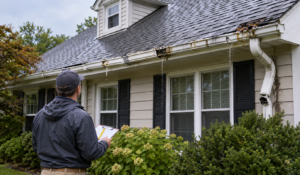
Gutter replacement may be necessary when multiple sections are leaking, sagging, corroded, or overflowing even after cleaning and repair.
A contractor should evaluate the material, alignment, downspouts, fascia, and previous repairs.
Localized damage may be repairable, while widespread deterioration or poor system design may require replacement.
1. Leaks Keep Returning After Repairs
Localized gutter leaks may only require resealing, but leaks that return or affect several joints may indicate widespread gutter deterioration.
Warning signs include:
- Multiple leaking seams
- Failed previous repairs
- Loose or missing end caps
- Staining beneath several gutter runs
- Leaks continuing after cleaning
An inspection can determine whether another repair is practical or replacement is more suitable.
2. Gutters Are Sagging, Bent, or Pulling Away
Sagging gutters cannot maintain the slope needed to move water toward downspouts.
Wet debris, standing water, loose hangers, poor fastener spacing, deteriorated fascia, and storm impacts can cause the problem.
A few loose hangers or a minor slope problem may be repaired.
Replacement may be appropriate when several runs sag, channels are permanently bent, or gutters have separated extensively.
The fascia should be inspected first because deteriorated wood may not hold new fasteners securely.
3. Cracks, Holes, Rust, or Joint Separation Are Widespread
Metal gutters may corrode after their finish wears away. Vinyl can become brittle, while sectional gutters may separate at joints. Hail, branches, and accidental impacts may also damage channels.
Warning signs include:
- Orange or brown rust marks
- Flaking or thinning metal
- Multiple holes or cracks
- Separated gutter sections
- Loose end caps
- Water leaking across several runs
One small hole may be repaired if surrounding material remains sound. Widespread corrosion, cracking, or joint failure suggests that isolated patches may not remain effective.
4. Water Continues to Overflow After Cleaning
If gutters overflow after cleaning, the cause may be incorrect slope, damaged downspouts, tilted channels, too few discharge points, or inadequate capacity.
Roof valleys can concentrate runoff in one area, causing water to spill onto siding, fascia, landscaping, or foundation soil.
Replacement can correct gutter size, slope, hanger placement, downspout quantity, and discharge locations. A contractor should evaluate runoff patterns before recommending a new layout.
5. Water Is Collecting Around the Property
Gutters may appear intact while failing to move water away.
Disconnected downspouts, crushed elbows, missing extensions, blocked drains, or poor slope can cause water to collect beside exterior walls.
Look for:
- Puddles near the house
- Soil erosion beneath the roofline
- Mulch or landscaping washing away
- Stains along the foundation
- Damp basement or crawl-space areas
- Water flowing across walkways
- Downspouts discharging beside the building
Some problems only require downspout repair, realignment, or an extension. Replacement may suit system-wide drainage failures. Grading and underground drains may also need evaluation.
6. Repairs Are Becoming Frequent
Cleaning debris, clearing a downspout, resealing one joint, or tightening a fastener are normal maintenance tasks and do not automatically justify replacement.
Consider replacement when leaks return, several runs need repair, channels require repeated realignment, or multiple components fail.
The decision should depend on overall condition, repair effectiveness, and drainage performance, not a fixed number of repairs.
Should Gutters Be Replaced During a Roof Replacement?
Gutters do not always need replacement during a roof replacement.
Coordinating both projects may be practical when the gutters are already deteriorated, interfere with roof-edge work, or must be removed during installation.
Completing the projects together may make sense when:
- Gutters already show widespread damage
- Fascia or soffit repairs are needed
- Drip edge or other roof-edge components require correction
- The roof design changes runoff patterns
- Existing gutters must be removed for roofing work
- A coordinated exterior color or style is desired
Existing gutters may remain when correctly sized, aligned, securely attached, and in good condition.
Roof-edge, drip-edge, fascia, and soffit repairs should generally occur before final new gutter installation. Coordinating the crews helps keep one project from interfering with the other.
Over time, damaged gutters can affect your roof by allowing water to reach the fascia, soffits, roof edges, and other areas that should remain protected.
Should You Repair or Replace Your Gutters?
Repair is usually more suitable when damage is localized and most of the system remains structurally sound.
Replacement may be more appropriate when defects affect several runs or the current design repeatedly fails.
| Repair May Be Appropriate | Replacement May Be Appropriate |
| One isolated seam leak | Leaks across multiple sections |
| A few loose hangers | Extensive sagging or detachment |
| One damaged downspout | Several damaged downspouts |
| Minor slope adjustment | Poor slope across the system |
| Small localized hole | Widespread cracks or corrosion |
| Gutters manage runoff correctly | Existing system cannot manage runoff |
| Fascia remains sound | Extensive fascia deterioration |
| Previous repairs remain effective | Problems repeatedly return |
This is general guidance. An inspection is necessary before making the final decision.
What Affects Gutter Replacement Cost in Atlanta?
Gutter replacement cost varies with property measurements, access, and drainage requirements. Factors include:
- Total roofline length
- Number of stories
- Gutter material
- Sectional or seamless construction
- Gutter width and capacity
- Number and length of downspouts
- Roof pitch and accessibility
- Number of corners and roof levels
- Removal of the existing system
- Fascia or soffit repairs
- Gutter guards or other additions
- Labor and material availability
- Property location and site conditions
A straightforward one-story home may require less work than a multistory property with steep slopes, numerous corners, damaged fascia, and complex drainage.
Request an on-site inspection and written proposal instead of relying on a generic online price.
Which Gutter Material Is Suitable for an Atlanta Home?
Material selection should consider the roof, rainfall, architecture, maintenance, budget, and appearance.
Aluminum Gutters
Aluminum is lightweight, rust-resistant, available in various colors, and commonly used for seamless systems.
Steel Gutters
Steel offers strength and impact resistance but is heavier and may require corrosion protection.
Copper Gutters
Copper offers a distinctive appearance but requires specialized installation and a higher initial investment.
Vinyl Gutters
Vinyl is lightweight and sectional but may become brittle, crack, or deform with weather exposure.
A contractor should recommend the material and size according to the property.
What Happens During Gutter Replacement?
Gutter replacement involves more than removing the existing channels and attaching new ones.
The installer must evaluate how water moves across the roof, inspect the surfaces supporting the gutters, and design the new system to direct runoff toward suitable discharge areas.
1. Inspecting the Existing System
The process usually begins with an inspection of the gutters, downspouts, fascia, soffits, and roof edge.
The contractor identifies why the old system failed, which may involve poor slope, inadequate capacity, loose fasteners, damaged downspouts, or deteriorated fascia.
This step helps prevent the same drainage problems from being repeated with the new installation.
2. Measuring and Planning the Layout
The installer measures each roofline and identifies corners, roof valleys, and areas that receive concentrated runoff. These details help determine:
- Gutter material and size
- Length of each gutter run
- Number and location of downspouts
- Direction of the gutter slope
- Suitable discharge locations
- Need for extensions or other drainage components
Measurements should be confirmed before fabrication because the replacement system must fit the property’s actual dimensions.
3. Removing the Existing Gutters
The old gutters, downspouts, hangers, and fasteners are removed carefully to avoid unnecessary damage to the roof edge, siding, or fascia.
Once the gutters are removed, previously concealed areas become easier to inspect.
Soft, rotted, or damaged fascia should be repaired before installing new gutters.
Attaching a new system to deteriorated wood may prevent the fasteners from holding securely and could lead to future sagging or separation.
4. Preparing and Installing the New Gutters
For a sectional system, individual lengths are cut and connected using appropriate joints and sealants. Seamless gutters are formed on-site to match individual straight roof runs.
They contain fewer joints along those runs, although corners, end caps, outlets, and downspout connections still require careful sealing.
Before attachment, the installer establishes a slight slope toward the downspouts.
The gutters are then secured with appropriately placed hangers or brackets. Correct slope and support allow water to drain while helping prevent standing water and sagging.
5. Connecting the Downspouts
Downspout outlets, elbows, vertical sections, and straps are installed after the gutters are secured. Their location should reflect the roof’s drainage patterns rather than appearance alone.
The discharge point is also important. Extensions, splash blocks, or connections to an approved drainage system may be used to prevent water from emptying directly beside the home.
6. Testing the Completed System
After installation, water may be run through the gutters to confirm that it moves toward the downspouts without pooling. The installer should also check:
- Corners and end caps for leaks
- Seams and outlets for secure seals
- Downspouts for unrestricted flow
- Gutters for proper alignment
- Hangers and brackets for secure attachment
- Discharge points for appropriate drainage
Any leaks, standing water, or loose connections should be corrected before the project is considered complete.
Professional replacement guides similarly emphasize accurate measurement, fascia inspection, correct slope, secure attachment, and final water-flow testing as essential parts of installation.
7. Final Cleanup and Walk-Through
The crew removes old materials and debris before reviewing the completed work with the homeowner.
They should also explain the downspout locations, maintenance needs, and any remaining drainage concerns.
Plan Your Gutter Replacement in Atlanta, GA
If your gutters continue to leak, sag, or overflow after cleaning and repairs, replacing them may be the more practical solution.
Before deciding, have the gutters, downspouts, fascia, soffits, and drainage areas inspected.
If you are also replacing your roof, plan both projects together so the roof edge and fascia can be repaired before the new gutters are installed.
Eagle Watch Roofing can inspect the existing system and help determine whether your home needs a repair, partial replacement, or complete gutter replacement in Atlanta, GA.
Frequently Asked Questions
Should I Replace My Gutters When Replacing My Roof?
Gutter replacement is not automatically required with a new roof. Coordinating both projects may be practical when the gutters are damaged, fascia repairs are necessary, or the roofing work requires gutter removal.
What Affects Gutter Replacement Cost in Atlanta?
The cost depends on the roofline length, property height, gutter material, accessibility, downspout requirements, fascia condition, and installation complexity. An on-site inspection is necessary for an accurate estimate.
Can Only One Section of a Gutter System Be Replaced?
Partial replacement may be possible when damage is limited and compatible materials are available. The new section must connect correctly with the existing system and maintain proper water flow.
Can New Gutters Be Installed Without Damaging the Roof?
Professional removal and installation can generally be completed without damaging a sound roof. The contractor should inspect the fascia, drip edge, and roof edge and coordinate carefully when roofing work is also planned.