


Roof Repair and Roof Insurance Claims: What Homeowners Should Know
Roof damage can happen suddenly after storms, hail, wind, falling branches, or heavy rain.
When damage appears, many homeowners are unsure whether the roof can be repaired or if the issue should be handled through an insurance claim.
Understanding how roof repair and roof insurance claims work together can help homeowners make informed decisions and avoid delays.
Small roof problems can quickly become larger issues if they are ignored, especially when water begins entering the home.
Professional roof inspections can help determine the extent of the damage, whether repairs are needed, and if the problem may qualify for insurance coverage.
Common Signs That Roof Repair May Be Needed
Roof damage is not always obvious from the ground. In many cases, leaks and moisture problems begin long before homeowners notice visible interior damage.
Common signs that roof repair may be needed include:
- Missing shingles
- Cracked or curling shingles
- Water stains on ceilings
- Damp attic insulation
- Mold or mildew growth
- Sagging roof areas
- Damaged flashing
- Granule loss in gutters
- Visible roof leaks
- Daylight visible in the attic
These warning signs may indicate that water is entering the roof system.
Addressing damage early can help prevent larger structural problems and reduce the risk of more expensive repairs later.
Homeowners may also notice rising energy bills, musty odors, drafts near the attic, peeling paint, or stains around vents and chimneys.
Some roofing issues may not become visible until severe weather occurs and water begins entering the home.
Granule loss in gutters can be a sign that asphalt shingles are beginning to wear down.
Sagging roof sections may indicate trapped moisture, damaged decking, or structural weakness below the roofing materials.
A professional roof inspection can help identify hidden damage before it becomes worse.
Early repairs may help extend the life of the roof, reduce interior damage, and improve the overall condition of the home.
What Roof Damage May Qualify for Insurance Coverage
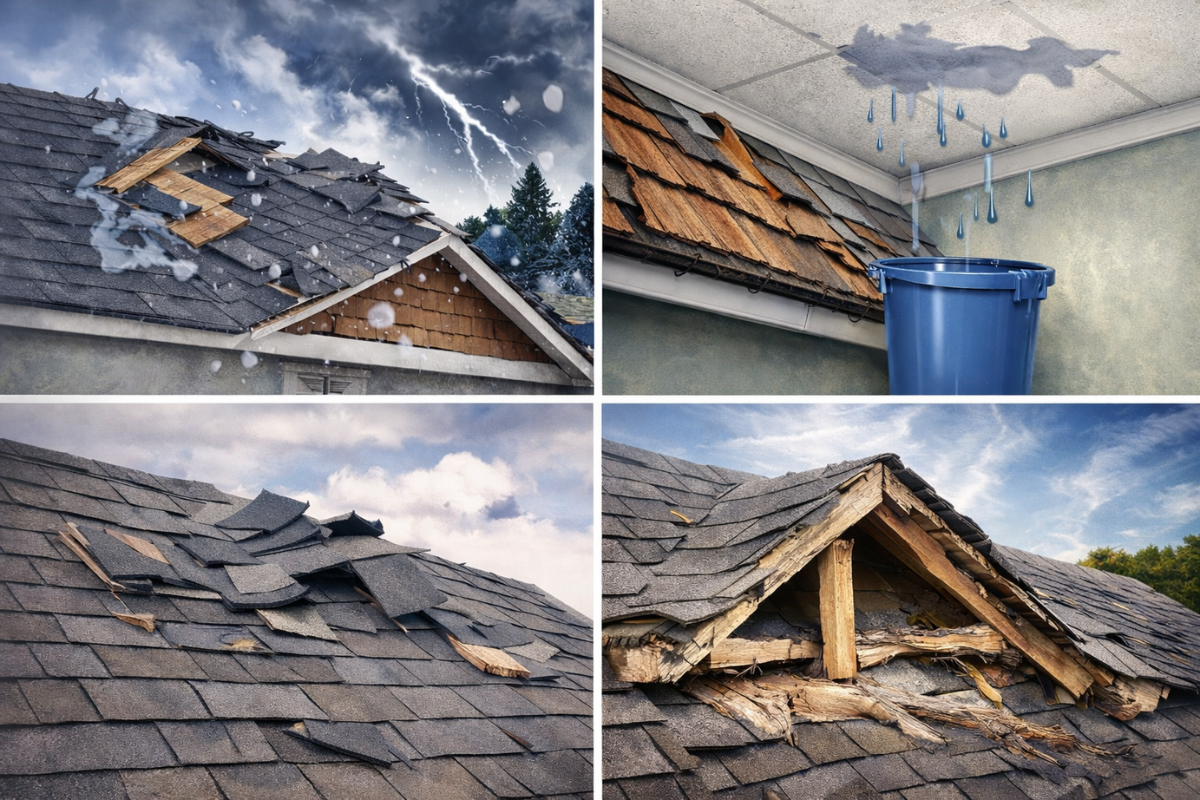
Not all roof problems are covered by homeowners insurance.
In most cases, insurance policies are designed to cover sudden, accidental, and unexpected damage rather than issues that develop slowly over time due to age or lack of maintenance.
Roof damage may qualify for an insurance claim if it is caused by:
- Hail damage that dents shingles, cracks roofing materials, or causes granule loss
- Strong winds that lift, loosen, or remove shingles
- Fallen tree limbs that puncture or damage the roof surface
- Severe storms that create visible structural damage
- Fire damage affecting the roof, attic, or surrounding structure
- Lightning strikes that damage roofing materials or create fire hazards
- Heavy rain that leads to sudden leaks after a storm event
- Tornadoes, hurricanes, or other major weather-related incidents
- Ice dams that force water under shingles and into the home
- Damage from flying debris during storms
- Roof collapse caused by snow or fallen trees
- Water intrusion resulting from storm-related roof openings
Insurance companies often look for evidence that the damage happened suddenly and was not the result of a long-term issue.
For example, a roof leak that begins immediately after a major storm may qualify for coverage, while a leak caused by worn shingles that have not been maintained for years may not.
Damage caused by normal wear and tear, aging roofing materials, poor installation, neglect, or a lack of maintenance is generally not covered under most homeowners insurance policies.
Homeowners should document storm damage as soon as possible with photos and schedule a professional roof inspection to determine whether the damage may qualify for a claim.
Why a Roof Inspection Is Important After Storm Damage
After severe weather, homeowners should schedule a professional roof inspection even if there are no obvious leaks.
Some forms of storm damage are difficult to see without getting on the roof or inspecting the attic.
A roof inspection may identify:
- Missing or lifted shingles
- Hail impact marks
- Cracked flashing
- Soft roof decking
- Moisture inside the attic
- Damaged gutters
- Loose vents or chimney flashing
- Water intrusion around skylights
Early inspections can help homeowners document storm damage before it becomes worse. This information may also be helpful if an insurance claim is filed.
How Roof Repair and Insurance Claims Work Together
Roof repair and roof insurance claims are often connected because contractors can help homeowners understand the extent of the damage and whether it may qualify for coverage.
The process often includes:
- Scheduling a roof inspection
- Documenting visible damage
- Taking photos of roof and attic issues
- Filing an insurance claim if needed
- Meeting with the insurance adjuster
- Reviewing the claim decision
- Scheduling roof repairs
Roofing contractors may also help identify hidden damage that could support a supplemental claim if additional problems are discovered later.
What Happens if Roof Damage Is Not Repaired Quickly
Delaying roof repair can allow small problems to become larger and more expensive. Water may continue entering the attic, insulation, ceilings, and walls.
Roof damage that is not repaired quickly may lead to:
- Mold growth
- Wood rot
- Damaged insulation
- Interior ceiling stains
- Electrical hazards
- Damaged drywall
- Higher repair costs
- Structural issues
Prompt roof repair can help protect the home and reduce the chance of future insurance problems.
Learn More About Roof Repair and Roof Insurance Claims
Roof repair and roof insurance claims can be difficult to navigate, especially after storms or unexpected roof damage.
Understanding the signs of damage, the inspection process, and the basics of insurance coverage can help homeowners make better decisions.
Eagle Watch Roofing helps homeowners inspect roof damage, document storm-related issues, and determine whether repairs or insurance claims may be needed.
Professional evaluations can help protect the home and make the repair process easier from start to finish.
Frequently Asked Questions
Can missing shingles lead to bigger roof problems?
Missing shingles can expose the roof decking to moisture, which may lead to leaks, wood rot, mold growth, and interior water damage. Even a small section of missing shingles can allow rainwater to enter the attic and damage insulation or ceilings. Replacing damaged shingles quickly can help prevent larger and more expensive repairs.
How do I know if I need roof repair or roof replacement?
A roofing contractor can inspect the condition of the roof and determine whether repairs are enough or if replacement may be more cost-effective. Factors may include roof age, extent of damage, and the condition of the roofing materials. Roofs with repeated leaks, widespread shingle damage, or structural issues may be better candidates for replacement.
Does homeowners insurance cover roof leaks?
Homeowners insurance may cover roof leaks if they are caused by a sudden event such as hail, wind, fallen branches, or storm damage. Leaks caused by normal wear and tear or poor maintenance are less likely to be covered. Reviewing the policy and scheduling an inspection can help homeowners understand their options.
Why is documentation important for a roof insurance claim?
Photos, inspection reports, and contractor estimates can help support a roof insurance claim. Documentation may show when the damage happened, how severe it is, and what repairs may be needed. Good records can make it easier for insurance companies to review the claim.
What is a supplemental roof insurance claim?
A supplemental claim is an additional request for coverage when hidden damage is found after the original insurance estimate has been approved. This may include damaged roof decking, insulation issues, flashing problems, or water damage inside the attic. Supplemental claims can help cover repair costs that were not included in the first estimate.
Can damaged flashing cause roof leaks?
Damaged flashing around chimneys, vents, skylights, and roof valleys can allow water to enter the roof system. Even small cracks or gaps in flashing may lead to leaks, wood rot, mold growth, and attic moisture problems over time. Flashing should be inspected regularly as part of routine roof maintenance.