


Why New Roof Installation and New Gutter Installation Often Go Together
A new roof installation is one of the biggest investments a homeowner can make in their property.
When replacing a roof, many homeowners also consider replacing their gutters at the same time.
Roofs and gutters work together to protect the home from rain, moisture, and water damage.
If an older gutter system is left in place after a roof replacement, it may not perform properly with the new roofing materials.
Damaged, clogged, sagging, or outdated gutters can reduce the effectiveness of the new roof and increase the risk of water damage around the home.
Understanding how roofs and gutters work together can help homeowners decide whether new gutter installation should be included as part of a larger roofing project.
Why Gutters Matter During a Roof Replacement
Gutters are designed to collect rainwater from the roof and direct it away from the home.
Without a properly functioning gutter system, rainwater can overflow and damage the roofline, siding, foundation, landscaping, and other areas of the property.
During a new roof installation, contractors may inspect the gutter system to determine whether it is still in good condition. Old gutters may show signs of:
- Rust
- Cracks or holes
- Sagging sections
- Loose fasteners
- Overflow problems
- Water stains on siding
- Improper drainage
- Frequent clogging
If gutters are already damaged or nearing the end of their lifespan, replacing them during a roof installation project may help avoid future repairs.
Benefits of Installing New Gutters with a New Roof
Replacing gutters during a roof installation project can offer several benefits for homeowners.
Better Water Drainage
New gutters can improve how water flows away from the roof and foundation. This helps reduce the risk of leaks, erosion, and standing water around the home.
Improved Roof Protection
When gutters work properly, they help protect the roof edges, fascia boards, soffits, and attic areas from excess moisture.
Better Appearance
Installing a new roof and new gutters together can improve the overall appearance of the home. Matching materials and colors can create a cleaner, more updated look.
Lower Long-Term Maintenance Costs
Replacing both systems at the same time may reduce the need for future repairs and maintenance. Homeowners can avoid paying for gutter removal, reinstallation, or adjustments later.
Easier Installation Process
Roofing contractors often have easier access to the gutter system during roof replacement. Completing both projects together may save time and reduce labor costs.
Signs It May Be Time for New Gutters
Not every roof replacement requires new gutters, but there are situations where replacing the gutter system may make sense.
Homeowners may want to consider new gutter installation if they notice:
- Gutters pulling away from the home
- Water overflowing during rainstorms
- Cracks, holes, or rust spots
- Peeling paint near the roofline
- Pooling water near the foundation
- Frequent clogs and debris buildup
- Sagging or uneven gutter sections
- Basement or crawl space moisture
These signs may indicate that the gutter system is no longer working properly and could affect the performance of the new roof.
How Gutters Help Protect the Foundation
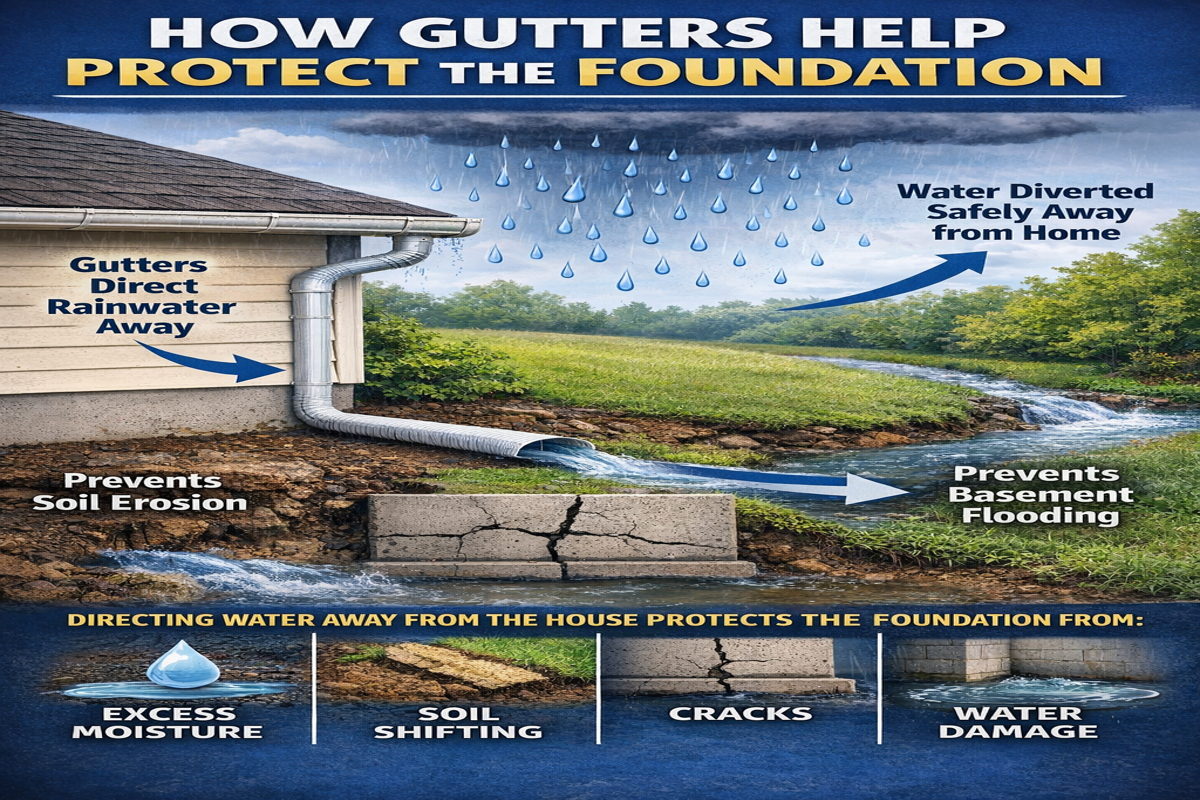
One of the most important jobs of a gutter system is directing water away from the foundation.
Without proper drainage, water can collect around the home and create long-term structural problems that may be expensive to repair.
Poor gutter drainage can lead to:
- Soil erosion
- Foundation cracks
- Basement leaks
- Crawl space moisture
- Mold and mildew growth
- Standing water around the home
When rainwater is not directed away from the home properly, it can saturate the soil around the foundation.
Over time, this extra moisture may cause the ground to shift, settle, or expand, which can place additional pressure on the foundation walls.
Excess water near the home can also enter basements and crawl spaces, leading to damp conditions, musty odors, insulation damage, and mold growth.
These moisture issues can affect indoor air quality and create additional repair needs inside the home.
A new roof installation protects the top of the home, while new gutters help protect the areas below.
Together, they create a more complete water management system that helps reduce water damage and improve long-term protection for the entire property.
Choosing the Right Gutter System for a New Roof
When planning a new gutter installation, homeowners may have several options to consider.
Common gutter materials include:
- Aluminum
- Copper
- Steel
- Vinyl
Homeowners may also choose from different gutter styles, such as:
- K-style gutters
- Half-round gutters
- Seamless gutters
Seamless gutters are a popular choice because they reduce the number of joints where leaks can occur.
Contractors may also recommend larger downspouts or gutter guards depending on the roof size, tree coverage, and drainage needs.
Why Professional Installation Matters
Both roofing systems and gutter systems must be installed correctly to work properly.
Poor installation can lead to drainage problems, leaks, roof edge damage, water intrusion, and premature wear on both the roof and gutter system.
Professional contractors can help ensure:
- Gutters are properly sized
- Downspouts are placed correctly
- Roof runoff is directed away from the home
- Gutter pitch is correct
- Water flows efficiently during heavy rain
Experienced contractors can also inspect the fascia boards, soffits, roof edges, and drainage areas around the home to identify hidden issues before installation begins.
This can help prevent future problems such as standing water, foundation damage, basement moisture, and gutter overflow.
Professional installation is especially important when replacing both the roof and gutters at the same time.
Proper coordination between both systems helps ensure the gutters align correctly with the roofline and can handle water runoff effectively.
Working with experienced roofing and gutter professionals can help homeowners avoid costly mistakes, reduce maintenance needs, and improve the long-term performance of both systems.
Planning a New Roof and Gutter Installation Project
A new roof installation and new gutter installation often work best when planned together.
Since roofs and gutters work as part of the same water management system, replacing both at the same time can help improve drainage, reduce the risk of leaks, and protect the home more effectively.
Gutters help protect the roof, siding, foundation, landscaping, soffits, and fascia by directing water away from the home.
If old gutters are damaged, clogged, sagging, or pulling away from the roofline, they may not perform properly with a newly installed roof.
Planning both projects together can also help homeowners avoid additional labor costs later.
Roofing contractors can inspect the condition of the existing gutter system during the roof replacement process and determine whether repairs or replacement are needed.
Eagle Watch Roofing helps homeowners evaluate both roofing systems and gutter systems during replacement projects.
Professional inspections can help determine whether new gutters should be included as part of a new roof installation for better long-term protection, drainage, and overall performance.
Frequently Asked Questions
Should gutters always be replaced with a new roof?
If the gutters are still in good condition, they may not need to be replaced. However, damaged, rusted, sagging, or outdated gutters may be worth replacing during a roof project. Replacing gutters at the same time as the roof can also improve drainage, reduce future labor costs, and create a more consistent appearance for the home.
Can old gutters damage a new roof?
Yes, old gutters that overflow or pull away from the roofline can allow water to damage fascia boards, soffits, roof decking, and siding. Poor drainage can also lead to water pooling around the foundation and increased moisture near the attic or crawl space. Replacing damaged gutters can help protect the new roof and reduce the risk of future water damage.
What type of gutters work best with a new roof?
Seamless aluminum gutters are a popular choice because they are durable, lightweight, and less likely to leak than sectional gutters. Many homeowners choose seamless systems because they have fewer joints and require less maintenance over time. Other options, such as copper or steel gutters, may also work well depending on the style of the home and the homeowner’s budget.
How long do gutters usually last?
The lifespan of gutters depends on the material and maintenance. Aluminum gutters may last around 20 years, while copper gutters may last much longer. Regular cleaning, inspections, and prompt repairs can help extend the life of the gutter system. Gutters that are exposed to heavy debris, standing water, or harsh weather may wear out more quickly.
Are gutter guards worth adding during a new gutter installation?
Gutter guards can help reduce debris buildup and lower maintenance needs. They may be especially helpful for homes with large trees nearby. By limiting leaves, twigs, and other debris from entering the gutters, guards can improve water flow and reduce the risk of clogs. Homeowners may still need occasional maintenance, but gutter guards can make the system easier to manage over time.