


What Makes Spray Foam Insulation a Great Choice for Commercial and Residential Buildings
Insulation plays a critical role in how a building performs over its lifetime.
It directly impacts energy efficiency, indoor comfort, moisture control, operating costs, and long-term structural durability.
While traditional insulation materials such as fiberglass and cellulose have been widely used for decades, they often struggle to meet today’s high-performance building standards.
Spray foam insulation benefits stand out because this advanced insulation solution combines thermal resistance, air sealing, and moisture protection into one seamless system.
Spray foam insulation has become a preferred choice for both residential projects and commercial buildings.
By creating a tight, well-sealed building envelope, it helps reduce energy loss, improve indoor comfort, and protect structures from moisture-related damage.
This guide explains what spray foam insulation is, how it works, and why it is considered a superior insulation option for modern homes and commercial properties.
What Is Spray Foam Insulation?
Spray foam insulation is a two-component polyurethane material applied as a liquid that expands rapidly into a solid foam.
When sprayed into wall cavities, attics, roofs, or other building assemblies, it expands to fill gaps, cracks, and voids, forming a continuous insulation layer.
Unlike traditional insulation that is cut and fitted into place, spray foam conforms to the shape of the structure.
This allows it to seal irregular spaces and hard-to-reach areas that are commonly missed with fiberglass or cellulose.
Because of this, spray foam plays a crucial role in effective building envelope insulation.
Spray foam insulation is available in two main types and that are open-cell and closed-cell.
Each type is designed for different applications, climates, and performance goals.
Open-Cell vs. Closed-Cell Spray Foam Insulation
Open-Cell Spray Foam Insulation
Open-cell spray foam is lighter and less dense, and it comes with a soft and flexible structure.
It expands significantly during application, making it ideal for filling wall cavities and providing continuous air sealing.
It offers excellent sound absorption, helps reduce air leakage, and allows limited vapor permeability.
Open-cell foam is commonly used in spray foam insulation for residential applications such as interior walls, ceilings, and attic spaces where comfort and noise reduction are key priorities.
Closed-Cell Spray Foam Insulation
Closed-cell spray foam is denser and more rigid, offering a much higher R-value per inch.
Its compact cell structure allows it to function as both an air barrier and a moisture barrier insulation.
This type of spray foam provides strong resistance to moisture, adds structural strength to walls and roofs, and performs exceptionally well in extreme climates.
Closed-cell foam is widely used in spray foam insulation for commercial projects, metal buildings, basements, crawl spaces, and roof systems where durability and moisture control are essential.
Spray Foam vs Traditional Insulation
When comparing spray foam vs traditional insulation, the performance differences are clear.
Fiberglass and cellulose can compress, shift, or leave gaps over time, allowing air leakage and reducing effectiveness.
Spray foam expands on application, creating a continuous and durable insulation layer.
Traditional insulation often requires maintenance or replacement, while spray foam maintains its performance for decades.
This makes spray foam an excellent option for insulation for new construction as well as renovation and retrofit projects.
Benefits of Spray Foam Insulation
Superior Thermal Performance and Energy Efficiency
One of the most important spray foam insulation benefits is its exceptional thermal performance.
Insulation effectiveness is measured by R-value, which represents resistance to heat flow, and closed-cell spray foam delivers one of the highest R-values available.
This allows buildings to maintain comfortable indoor temperatures with less energy loss throughout the year.
Beyond R-value, spray foam also stops uncontrolled air movement.
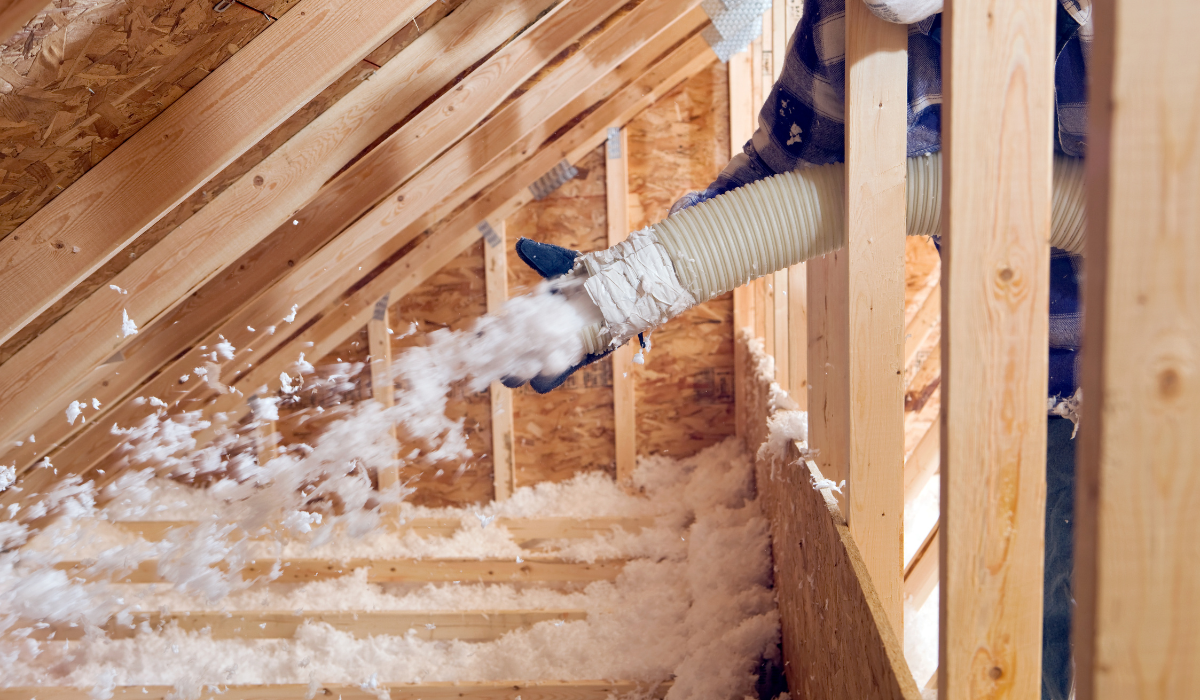
Traditional insulation may slow heat transfer, but it often allows air to pass through gaps and seams.
Spray foam addresses both issues at once by insulating and air sealing simultaneously.
As a result, buildings experience reduced heat loss in winter, less heat gain in summer, and more stable indoor temperatures.
This high level of energy efficiency helps lower utility costs and reduces strain on heating and cooling systems over time.
Advanced Air Sealing for Better Comfort
Air leakage is one of the largest contributors to energy loss in homes and commercial buildings.
Gaps around wiring, plumbing penetrations, framing joints, and attic access points allow conditioned air to escape while letting outdoor air enter.
Spray foam insulation expands to seal these openings completely, creating an airtight building envelope insulation system.
This prevents uncontrolled air movement that traditional insulation cannot fully address.
Effective air sealing results in fewer drafts, improved comfort across all rooms, reduced entry of dust and outdoor pollutants, and better overall humidity control.
These benefits are especially valuable in large commercial spaces and multi-level residential buildings.
Moisture Control and Mold Prevention
Moisture intrusion can lead to serious issues such as mold growth, wood rot, corrosion, and costly structural repairs.
Closed-cell spray foam acts as an effective moisture barrier insulation by resisting water absorption and limiting vapor movement through walls and roofs.
By sealing gaps and reducing condensation risk, spray foam helps protect framing, roof decks, and interior finishes from moisture-related damage.
This level of moisture control is particularly important in humid climates, basements, crawl spaces, and commercial facilities where excess moisture exposure is common.
Why Spray Foam Insulation Is Ideal for Commercial Buildings
Spray foam insulation commercial applications offer long-term performance advantages for warehouses, office buildings, retail spaces, manufacturing facilities, and agricultural structures.
By minimizing air leakage and improving thermal efficiency, spray foam helps reduce operating costs and delivers measurable spray foam cost savings over time.
Closed-cell spray foam also adds rigidity to walls and roofs, improving resistance to wind uplift and structural stress—especially important in metal and industrial buildings.
Because spray foam does not sag or degrade, it reduces maintenance and replacement costs over the building’s lifespan.
Why Spray Foam Insulation Is Suitable for Residential Homes
Spray foam insulation is especially well suited for residential buildings because homes depend on consistent comfort, healthy indoor air quality, and efficient energy use.
Spray foam adapts to the unique layout of each home, sealing gaps that would otherwise allow air and moisture intrusion.
For homeowners, spray foam insulation residential applications provide more consistent indoor temperatures, improved comfort in attics and basements, reduced outside noise, and better humidity control.
Spray foam also helps lower energy bills and reduces wear on HVAC systems. Because it does not settle or deteriorate, homeowners continue to benefit from its performance year after year.
Eagle Watch Roofing Ensures Smart Pricing with Long-Term Savings
Spray foam building insulation may have a higher upfront cost compared to traditional insulation options, but its long-term value makes it a smart financial decision.
The ongoing spray foam cost savings from reduced energy consumption, fewer maintenance issues, and an extended lifespan often far exceed the initial investment.
Improved insulation performance also lowers stress on HVAC systems, helping reduce repair and replacement costs over time.
With Eagle Watch Roofing, property owners can access affordable spray foam insulation solutions without sacrificing quality or performance.
Their team focuses on cost-effective pricing, professional installation, and energy-efficient materials to ensure homeowners and businesses receive maximum value.
By choosing Eagle Watch Roofing, customers gain a reliable insulation solution that delivers comfort, efficiency, and measurable savings for years to come.
Conclusion
Spray foam insulation stands out as a superior choice for both residential and commercial buildings because it insulates, air seals, and controls moisture in a single system.
Its exceptional thermal performance, durability, and energy efficiency make it a smart investment for insulation for new construction and renovation projects alike.
Whether the goal is lower energy bills, improved indoor comfort, or long-term building protection, spray foam insulation delivers reliable, lasting results that traditional insulation cannot match.
If you are planning a new build, renovation, or insulation upgrade, professional spray foam insulation can make a measurable difference in comfort, efficiency, and long-term value.
Contact our team today to schedule a consultation and learn how our spray foam insulation services can be tailored to your residential or commercial property.
Frequently Asked Questions
What makes spray-applied foam insulation different from other insulation types?
Spray-applied foam insulation expands to seal gaps and cracks, providing both insulation and air sealing in one application. This dual performance sets it apart from traditional insulation materials that only slow heat transfer.
Is spray foam insulation safe for homes and commercial buildings?
When installed by trained professionals using proper procedures, spray foam insulation is safe, durable, and approved for residential and commercial use. Proper curing ensures long-term performance without health concerns.
How does spray foam insulation improve energy efficiency?
Spray foam reduces air leakage and heat transfer at the same time. This improves overall building efficiency, helping heating and cooling systems work less and reducing energy costs.
Can spray foam insulation help prevent moisture problems?
Yes, closed-cell spray foam acts as a moisture barrier insulation, limiting water intrusion and condensation that can lead to mold and structural damage.
Is spray foam insulation suitable for older homes?
Spray foam can be installed in many existing homes during renovations or retrofits. It is especially effective at improving comfort and efficiency in homes with air leakage issues.
What areas of a home benefit most from spray foam insulation?
Attics, crawl spaces, basements, and exterior walls benefit significantly because these areas are common sources of air and moisture infiltration.
Does spray foam insulation last longer than traditional insulation?
Yes, spray foam insulation can last for decades without sagging, compressing, or losing effectiveness, making it one of the most durable insulation options available.
Is professional installation really necessary?
Professional installation ensures proper application, safety, and performance. Correct thickness, curing, and material selection are essential for achieving full spray foam insulation benefits.