


How Spray Foam Insulation Can Help with Soundproofing Your Home
Spray foam soundproofing is becoming a popular solution for homeowners who want a quieter, more comfortable living environment without major structural changes.
Whether the issue is traffic noise, loud neighbors, or sound traveling between rooms, insulation plays a critical role in controlling how noise enters and moves through your home.
Unlike traditional insulation materials that primarily focus on temperature control, spray foam insulation offers added acoustic benefits by sealing gaps, filling cavities, and limiting air movement that carries sound.
Understanding how this material works and where it performs best can help homeowners make informed decisions when planning soundproofing improvements.
Modern homes face more noise challenges than ever. Urban development, open floor plans, shared walls, and hard interior surfaces all contribute to unwanted sound transfer.
Noise Problems in Homes: Why Sound Travels So Easily
Unwanted noise inside a home is rarely caused by a single issue.
Most residential sound problems occur because modern construction allows sound to move freely through open spaces, framing, and unsealed gaps.
Understanding where noise comes from and how it travels helps homeowners choose the right soundproofing solution.
Common Sources of Household Noise
Household noise comes from both external and internal sources, and each enters the home differently.
Outside noise typically includes traffic, nearby construction, lawn equipment, and general neighborhood activity.
These sounds often enter through exterior walls, attics, windows, and small openings that allow air movement.
Inside the home, noise commonly travels from home offices, media rooms, HVAC systems, plumbing lines, and shared walls between bedrooms or living spaces.
Footsteps, voices, televisions, and mechanical systems can easily move between floors and rooms when walls and ceilings are not properly insulated.
How Sound Travels Indoors
Sound moves through a home in two primary ways: airborne transmission and structural vibration.
Airborne sound travels through the air and passes easily through gaps around outlets, wiring, ductwork, and unsealed wall cavities.
Even small openings can allow sound waves to move freely from one space to another.
Structural vibration occurs when sound energy travels through building materials such as framing, floors, and ceilings.
Empty or poorly insulated cavities act like echo chambers, amplifying noise rather than absorbing it.
Without proper insulation, these spaces allow sound to travel farther and feel louder inside the home.
What Is Spray Foam Insulation?
Spray foam insulation is a liquid-applied material that expands on contact, forming a dense barrier once cured.
It adheres to surfaces and fills even the smallest cracks, creating a continuous seal that traditional insulation cannot match.
How Spray Foam Works
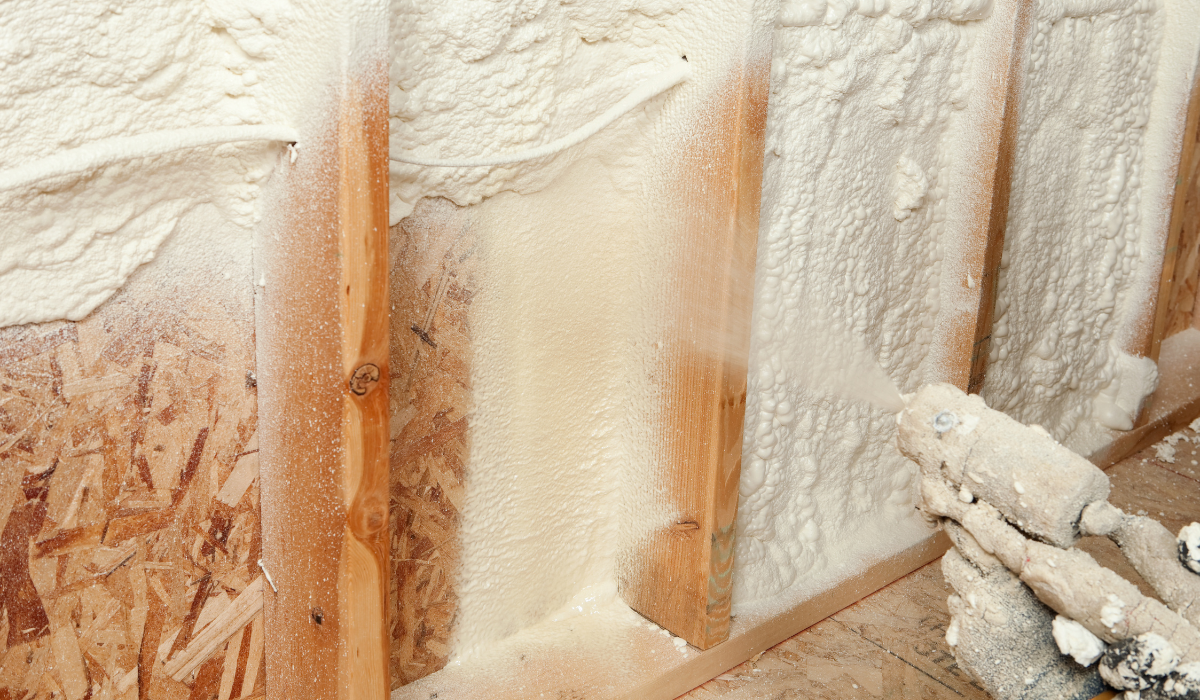
When applied, spray foam expands to fill wall cavities, ceiling spaces, and hard-to-reach gaps.
This expansion eliminates air pockets that allow sound waves to travel freely. The result is improved sound control along with better energy efficiency.
Open-Cell vs Closed-Cell Spray Foam
Open-cell foam is softer and more flexible, making it particularly effective for sound absorption.
Closed-cell foam is denser and adds structural rigidity, offering moderate noise reduction along with superior moisture resistance.
The right choice depends on where sound control is needed and the overall insulation goals of the home.
How Spray Foam Insulation Reduces Noise
Spray foam insulation for soundproofing works by addressing the main pathways that sound uses to move through a building.
Air Sealing and Noise Reduction
Sound travels easily through air gaps around outlets, wiring, plumbing, and framing.
Spray foam seals these gaps completely, limiting the movement of sound between rooms and from outside.
Sound Absorption in Wall Cavities
Open-cell spray foam absorbs sound waves within wall and ceiling cavities, reducing echo and minimizing noise transfer.
This makes it especially effective for bedrooms, offices, and media spaces.
Reduction of Sound Amplification
Uninsulated cavities act like echo chambers. By filling these spaces, spray foam reduces vibration and dampens sound energy before it reaches other areas of the home.
Areas Where Spray Foam Soundproofing Works Best
Not all parts of a home experience noise the same way. Strategic application delivers the best results.
Walls Between Rooms
Soundproofing walls with spray foam helps reduce noise between bedrooms, bathrooms, and shared living spaces. This is ideal for families, multi-generational homes, and remote workers.
Ceilings and Floors
Spray foam insulation for walls and ceilings minimizes noise transfer between floors, especially in homes with hardwood or tile flooring where sound reflection is common.
Attics and Exterior Walls
Exterior noise from traffic or weather often enters through attics and outside walls.
Spray foam noise reduction in these areas creates a quieter indoor environment while also improving thermal performance.
Spray Foam vs Traditional Soundproofing Materials
Many homeowners compare spray foam with fiberglass or cellulose when exploring soundproof insulation for homes.
Fiberglass absorbs some sound but does not seal air leaks, allowing noise to pass through gaps.
Cellulose performs better acoustically but can settle over time, reducing effectiveness.
Spray foam provides consistent coverage, long-term performance, and superior air sealing, making it a reliable option for sound control.
Limitations of Spray Foam for Soundproofing
While spray foam insulation sound control is effective, it is not a complete solution for every noise issue.
Spray foam reduces airborne noise but does not fully eliminate impact noise such as footsteps or dropped objects.
For maximum soundproofing, it is often combined with drywall upgrades, resilient channels, or acoustic panels. Setting realistic expectations ensures better outcomes.
Additional Benefits Beyond Noise Reduction
Beyond acoustic improvements, spray foam insulation offers several added advantages.
In addition to sound control, spray foam insulation also improves indoor comfort by sealing allergens, dust, and pollutants.
Learn how spray foam insulation can improve indoor air quality and reduce allergens.
It enhances energy efficiency by reducing air leakage, helps control indoor humidity, improves comfort year-round, and can lower heating and cooling costs.
These combined benefits make spray foam a practical investment for homeowners seeking both quiet and efficiency.
Conclusion
Spray foam soundproofing provides an effective way to reduce unwanted noise while improving overall home performance.
By sealing air gaps, absorbing sound within wall cavities, and limiting noise transfer between spaces, spray foam insulation creates a quieter, more comfortable living environment.
While it may not eliminate every type of noise on its own, spray foam delivers long-lasting sound reduction when applied correctly and strategically.
For homeowners dealing with persistent noise issues, it offers a practical, high-performance solution worth considering.
If noise is disrupting your comfort at home, professional spray foam insulation can make a noticeable difference.
Contact a qualified insulation specialist today to evaluate your space, recommend the right spray foam solution, and help you create a quieter, more peaceful home environment.
Frequently Asked Questions
Does spray foam reduce noise in residential homes?
Yes, many homeowners ask, does spray foam reduce noise, and the answer is yes—especially airborne noise. Spray foam noise reduction works by sealing air gaps and absorbing sound within wall and ceiling cavities. This limits how sound travels between rooms and from outside sources.
Is spray foam insulation effective for soundproofing walls?
Spray foam insulation for soundproofing walls is highly effective because it fills cavities completely. Unlike traditional insulation, it prevents sound from passing through cracks and unsealed areas. This makes it a strong option for shared walls, bedrooms, and home offices.
What is the difference between open-cell and closed-cell spray foam for sound control?
Open cell vs closed cell spray foam soundproofing differs mainly in density and flexibility. Open-cell foam absorbs sound better and is often preferred for interior noise control. Closed-cell foam provides some sound reduction but is better suited for structural strength and moisture resistance.
Can spray foam help reduce noise between rooms?
Yes, homeowners looking to reduce noise between rooms with spray foam often see noticeable improvement. By sealing framing gaps and filling wall cavities, spray foam limits sound transfer between adjacent living spaces without major construction changes.
Is spray foam a good acoustic insulation option?
Acoustic insulation spray foam performs well by reducing echo and airborne sound. While it is not a full soundproofing system on its own, it significantly improves sound control when compared to fiberglass or cellulose insulation.
Where should spray foam be installed for the best soundproofing results?
Spray foam insulation for walls and ceilings provides the best results where sound transfer is most common. Interior walls, floor assemblies, attics, and exterior walls are key areas where spray foam sound control can noticeably improve comfort.
Can spray foam replace other home soundproofing insulation options?
Spray foam is one of the most effective home soundproofing insulation options, but it may work best when combined with other methods. In spaces with high noise sensitivity, pairing spray foam with drywall upgrades or acoustic panels delivers stronger results.
Does spray foam help with both indoor and outdoor noise?
Yes, soundproof insulation for homes using spray foam can reduce both indoor noise transfer and outdoor sound intrusion. It is particularly effective against traffic noise, neighborhood sounds, and mechanical noise entering through walls or attics.
Is soundproofing with spray foam a long-term solution?
Soundproofing with spray foam is considered a long-term solution because it does not settle or degrade over time. Once installed correctly, it continues to provide consistent noise reduction and energy efficiency benefits for the life of the home.