


How a Trusted Roofing Contractor in Newnan Avoids Mistakes
A trusted roofing contractor in Newnan knows that even a new roof can develop problems if key installation details are overlooked.
Issues such as damaged roof decking, improper underlayment, incorrect fastener placement, poor flashing installation, and inadequate attic ventilation can reduce the roof’s performance and lifespan.
Since many of these mistakes are difficult to fix after installation, careful planning and proper installation are essential.
Understanding these common errors helps homeowners make informed decisions and choose a contractor who prioritizes the entire roofing system, not just the shingles.
Why Roof Installation Mistakes Become Serious
A roof functions as a complete system, with the deck, underlayment, flashing, ventilation, and roofing materials working together to protect the home.
If one component is installed incorrectly, it can affect the performance of the entire roof. For example, poor flashing can cause leaks even when the shingles are properly installed.
The International Residential Code also treats these elements as part of one roofing assembly and requires roofing products to be installed according to the manufacturer’s instructions.
Mistake 1: Beginning Without a Complete Roof Assessment
A roof replacement involves more than removing old shingles and installing new ones.
The condition of the roof deck, attic, ventilation, drainage, and roof penetrations should also be evaluated, as these components can affect the quality and performance of the new roofing system.
Identify Existing Problems Before Installation
Before installation begins, the contractor should inspect the roof exterior and accessible attic areas to identify visible damage, moisture issues, or ventilation concerns.
After removing the old roofing materials, the exposed roof deck should also be examined before installing new underlayment.
Inspecting the roof at different stages helps identify issues that may not be visible during the initial assessment.
Mistake 2: Choosing Materials Based Only on Price
Roofing materials should be chosen based on more than cost or appearance.
Factors such as roof slope, deck condition, structural support, local building codes, weather exposure, ventilation all influence whether a roofing product is suitable for your home.
Match the Roofing System to the Home
A roofing contractor should recommend materials based on the home’s roof design, slope, and local weather conditions.
Homeowners should understand the installation requirements, maintenance needs, warranty coverage, and overall value of each option.
The best roofing material is one that suits the home’s structure and can be installed according to manufacturer guidelines, not simply the most expensive one.
Mistake 3: Installing Roofing Over a Weak Deck
The roof deck forms the foundation of the roofing system and must be structurally sound before new materials are installed.
It should be clean, dry, smooth, and capable of securely holding fasteners to support long-term roof performance.
Repair the Deck Before Covering It
After removing the old roofing materials, the exposed roof deck should be inspected for damage, weak sections, and loose debris.
Any issues should be repaired before installing the underlayment to provide a stable foundation and help avoid future roofing problems.
Mistake 4: Omitting or Misapplying Underlayment
Underlayment provides a protective layer between the roof deck and the roofing material.
It should be installed correctly, with proper overlaps and the right product for the roof type, slope, local building codes, and manufacturer requirements to ensure effective moisture protection.
Apply a Compatible Underlayment System
The underlayment should be compatible with the roofing system and installed over a properly prepared roof deck.
Proper overlaps, fastening, and installation around valleys and roof penetrations help create a smooth, moisture-resistant base that meets manufacturer guidelines and building code requirements.
Mistake 5: Using the Wrong Fasteners or Nailing Pattern
Correct fastener placement helps keep asphalt shingles securely attached and improves wind resistance.
Roofing contractors should install the recommended fastener type, number, depth, and placement according to the manufacturer’s guidelines to ensure proper roof performance.
Follow the Product-Specific Fastening Pattern
Before installation begins, the roofing crew should confirm the manufacturer’s fastening requirements and adjust nail guns for proper installation.
Fastener placement and depth should be checked throughout the project to ensure consistent, high-quality results.
Mistake 6: Misaligning Shingles or Roofing Sections
Roofing materials should be installed in the correct overlapping pattern to direct water safely off the roof.
Uneven alignment, improper overlaps, or inconsistent shingle exposure can affect both the roof’s appearance and its ability to shed water effectively.
Establish and Check Reference Lines
Roofing installers should use accurate layout lines and check shingle alignment throughout the project.
Careful installation around edges, valleys, ridges, and transitions helps ensure a uniform, properly functioning roof.
Mistake 7: Reusing Unsuitable Flashing
Flashing protects vulnerable areas such as chimneys, skylights, valleys, vents, and roof-to-wall intersections from water intrusion. Damaged or improperly installed flashing should be replaced, and all flashing should meet building code and manufacturer requirements for a watertight roofing system.
Replace and Integrate Flashing Correctly
The contractor should inspect existing flashing and replace any damaged or incompatible sections.
New flashing must be properly integrated with the roofing materials to direct water away, while sealants should only supplement not replace proper flashing installation.
Mistake 8: Ignoring Attic Ventilation
A roof replacement should account for conditions beneath the roof deck as well as the materials installed above it.
Poorly planned ventilation may allow excess heat and moisture to remain in the attic.
However, simply adding vents does not guarantee that airflow will improve. Intake and exhaust components need to work together.
Plan Balanced Intake and Exhaust Airflow
The contractor should evaluate the attic’s intake and exhaust ventilation to ensure proper airflow.
A balanced ventilation system, designed according to the home’s layout, building codes, and manufacturer guidelines, helps improve roof performance and prevent moisture buildup.
Mistake 9: Overlooking Valleys and Roof Penetrations
Roof valleys collect runoff from adjoining roof slopes, while vents, pipes, skylights, and chimneys interrupt the continuous roof surface.
These areas require careful layering because water must move around or past joints and openings without entering the roof assembly.
Detail Water-Concentrating Areas Carefully
Roof valleys, vents, skylights, and other penetrations should be installed using compatible materials and proper flashing techniques.
Correct placement of underlayment, shingles, and fasteners helps maintain effective drainage and prevents water intrusion.
Mistake 10: Installing Materials in Unsuitable Weather
Weather can affect worker safety, exposed roof areas, material handling, and product application.
Rain may wet the deck or enter uncovered sections of the home. Strong winds can make underlayment and shingles difficult to control.
Temperature can also affect how asphalt shingles seal and how certain materials should be handled.
Asphalt shingles may require special handling in cold weather. When temperatures are too low for the factory seal strips to activate properly, installers should follow the roofing manufacturer’s cold-weather application instructions.
Adjust the Installation Plan to Conditions
Contractors should monitor the weather before starting work and protect exposed roof areas if conditions change.
Pausing installation during rain, strong winds, or unsafe conditions helps prevent installation issues and ensures crew safety.
Mistake 11: Applying the Same Method to Every Product
Using the same installation method for every roofing product can lead to performance issues and warranty concerns.
Contractors should follow the manufacturer’s instructions for shingles, underlayment, fasteners, ventilation, and other components to ensure proper installation and maintain warranty eligibility.
Mistake 12: Ending the Project Without a Quality Review
Completing the roof installation without a final inspection can leave small issues unnoticed, such as exposed fasteners, damaged shingles, loose flashing, or leftover debris.
A thorough quality review ensures the roof is properly finished, the property is cleaned, and homeowners receive warranty and maintenance information before the project is complete.
Prevent Roof Installation Problems Before They Begin
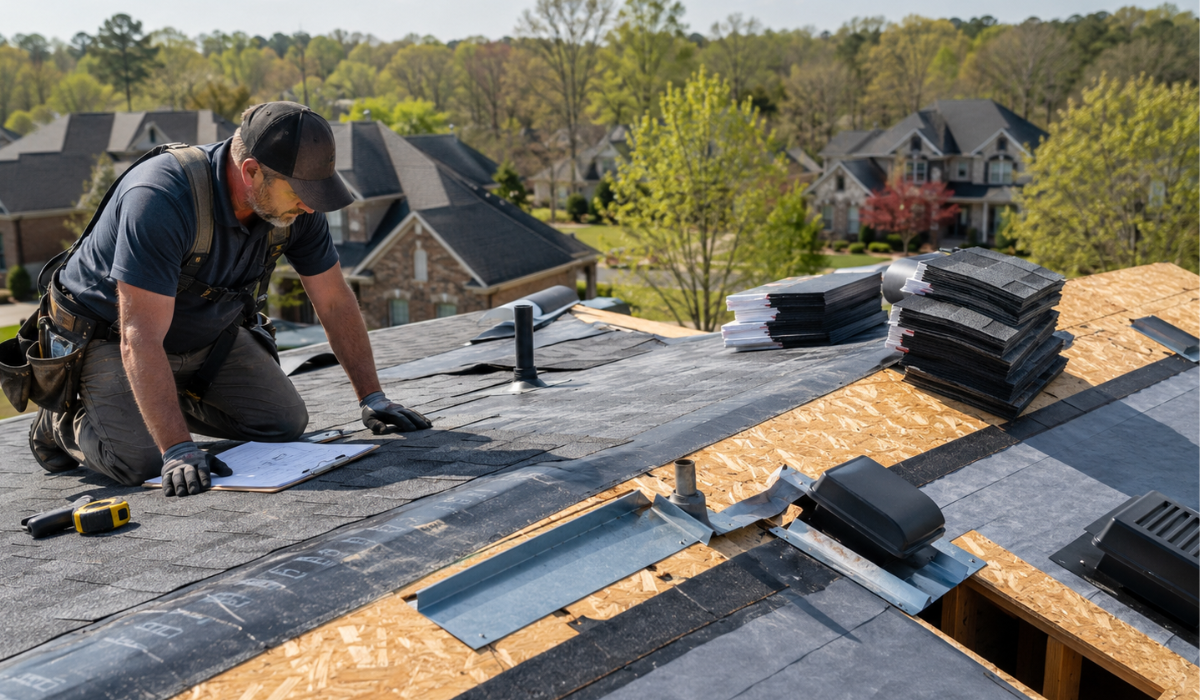
Most installation problems are easier to prevent while the roof is open and the work is underway.
Preparing the deck, selecting compatible materials, following the correct fastening pattern, integrating flashing, planning ventilation, and reviewing the completed installation can reduce the risk of avoidable roof problems.
Eagle Watch Roofing helps Newnan homeowners understand their roof’s condition and the work involved in a properly planned installation.
The project scope can be based on the roof design, visible conditions, selected materials, and issues uncovered after the existing roofing is removed.
You are welcome to discuss your roof installation project with our team.
FAQs
What Is a Common Roof Installation Mistake?
Incorrect fastener placement is one of the most common installation mistakes. Problems such as damaged decking, improper underlayment, and poorly installed flashing can also reduce the roof’s performance and lifespan.
Can Shingles Be Installed Over Damaged Decking?
Shingles should only be installed over a structurally sound roof deck that provides a stable surface and securely holds fasteners. Damaged or weakened decking should be repaired before installation.
Why Is Flashing Important During Roof Installation?
Flashing directs water away from roof valleys, chimneys, skylights, vents, and other vulnerable areas. Proper installation helps prevent leaks and protects the roof from moisture damage.
How Can Incorrect Nailing Affect a Roof?
Incorrect nail placement or depth can weaken shingle attachment, increase the risk of wind damage, and affect the roof’s ability to shed water effectively. Proper fastening improves long-term roof performance.
Does a New Roof Need Attic Ventilation?
Proper attic ventilation helps regulate heat and moisture levels, reducing the risk of condensation and supporting the overall performance and lifespan of the roofing system.
Must Contractors Follow Manufacturer Instructions?
Manufacturer installation guidelines provide specific requirements for roofing materials, fasteners, underlayment, and flashing. Following these instructions helps ensure proper installation, code compliance, and warranty protection.