


5 Signs Your Gutters Need Repair in Atlanta, GA
Gutter repair in Atlanta, GA, may be necessary when gutters begin leaking, sagging, overflowing, or pulling away from the fascia.
Gutters collect roof runoff and carry it through downspouts to a suitable discharge area. When this process fails, water may reach the siding, landscaping, roof edge, or foundation area.
Atlanta’s heavy rain, storms, falling branches, and accumulated leaves can strain residential gutters. However, not every drainage problem requires replacement.
A clog may need cleaning, while a leaking joint, loose hanger, or damaged downspout may need targeted repair. These five signs can help you recognize when to arrange an inspection.
Can Damaged Gutters Be Repaired, or Do They Need Replacement?
Localized leaks, separated seams, loose hangers, minor slope problems, and damaged downspouts can often be repaired when the surrounding materials remain in good condition.
Replacement may be more appropriate when gutters have widespread corrosion, repeated leaks, numerous cracks, severe deformation, or extensive damage to the fascia supporting them.
The correct recommendation depends on:
- The extent and location of the damage
- The gutter material
- The number of leaking areas
- The condition of the fascia and soffits
- The overall condition of the system
- Whether previous repairs have failed
A professional inspection should identify the cause
before a contractor recommends cleaning, repair, partial replacement, or new gutter installation.
1. Water Leaks From Seams, Corners, or End Caps
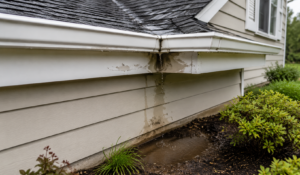
Gutter leaks frequently develop at seams, corners, end caps, and downspout connections.
Over time, sealant may deteriorate, joints can separate, fasteners may loosen, and metal may corrode. Hail, branches, and accidental impact can also crack or puncture gutters.
Some leaks only appear during heavy rain. Escaping water can soak the fascia and soffit, stain siding, disturb landscaping, or wash away soil below the damaged area.
Signs of a Gutter Leak
- Water dripping from seams or corners
- Water flowing behind the gutter
- Stains below gutter joints
- Peeling exterior paint
- Damp or discolored fascia
- Puddles beneath one section
Repair or Replace?
An isolated seam or end-cap leak may be resealed after proper surface preparation, and one damaged section may be replaced separately.
Multiple leaks, widespread corrosion, or deteriorated material may make broader replacement more practical. Household caulk applied to a wet or dirty seam is unlikely to provide a lasting repair.
2. Gutters Are Sagging or Pulling Away From the Fascia
Sagging gutters usually indicate a support, drainage, or fascia problem. Debris can block water from reaching the downspouts, leaving added weight that strains hangers, fasteners, and fascia boards.
Gutters may also sag because of poor hanger spacing, loose fasteners, or incorrect slope. Water then collects at the low point, and gaps can allow runoff to reach the fascia or siding.
Warning Signs
- A bowed or uneven gutter line
- Gaps between gutters and the roof edge
- Loose screws or exposed fasteners
- Standing water in a gutter section
- Movement during wind or rainfall
- Soft, stained, or deteriorating fascia
Repair or Replace?
Loose hangers may be repositioned or replaced if the gutter and fascia remain sound.
Realignment can restore the slope. Severely bent gutters, extensive detachment, or damaged fascia may require partial or complete replacement and wood repair.
3. Water Overflows During Rain
Overflowing gutters do not always need replacement. Leaves, pine needles, and roofing debris can obstruct the channel or downspout, causing water to spill over the front or flow behind the gutter.
Other causes include incorrect slope, tilted sections, crushed downspouts, damaged gutter guards, too few discharge points, or inadequate capacity where roof valleys concentrate runoff.
Why Overflow Should Not Be Ignored
Repeated overflow may stain siding, damage paint, soak fascia and soffits, erode landscaping, and leave water near the foundation. It may also contribute to basement or crawl-space moisture.
From a safe location during rain, note whether water escapes along the roofline, from one low section, or near a downspout. Never climb a ladder in wet or stormy conditions.
Cleaning, Repair, or Replacement?
A blockage may only require cleaning. Incorrect pitch may be realigned, and one damaged downspout may be repaired separately.
Repeated overflow from a deformed or incorrectly sized system may require replacement or redesign.
4. Cracks, Holes, Rust, or Separated Sections
Visible material damage warrants an inspection. Metal gutters may corrode when their protective finish fails or water remains trapped. Vinyl can become brittle, while sectional gutters may separate where pieces connect.
Branches, hail, and improper ladder placement can also cause damage. Even a small opening may repeatedly release water onto the fascia, siding, or landscaping.
Signs of Material Failure
- Rust spots or orange staining
- Small holes or visible cracks
- Separated joints
- Loose end caps
- Leaks in several locations
- Bent, dented, or crushed sections
Repair or Replace?
One small hole, loose end cap, or separated joint may be repairable when nearby material remains sound.
Widespread rust, recurring cracks, or damage across several runs may make isolated patches ineffective. One crack alone does not automatically require complete replacement.
5. Water Pools Near the Foundation or Damages Landscaping
Gutters may appear intact while failing to move water away from the house.
A disconnected downspout, crushed elbow, missing extension, blocked drain, or incorrect slope can cause runoff to collect beside exterior walls.
Short downspouts may discharge roof runoff too close to the building. Water can also escape behind loose gutters or roof-edge components that fail to direct it into the channel.
Signs of Poor Drainage
- Puddles beside exterior walls
- Soil erosion beneath the roofline
- Mulch or landscaping washing away
- Water marks on the foundation
- Damp basement or crawl-space areas
- Little or no water leaving a downspout during rain
Repair or Replace?
Downspout repair, gutter realignment, obstruction removal, or a suitable extension may resolve localized problems.
Replacement or redesign may be recommended when the system is poorly configured, extensively damaged, or unable to manage runoff.
Gutter work alone cannot correct every grading or underground drainage issue.
What Happens When Gutter Damage Is Ignored?
Damaged gutters may direct water toward areas not designed for repeated moisture.
Leaks and overflow can contribute to fascia and soffit deterioration, peeling paint, siding stains, erosion, and moisture near the foundation.
Water behind the gutter may affect the roof edge or supporting wood.
Persistently damp areas could support mold or mildew, while loose fasteners may eventually allow a loaded gutter section to detach.
The extent depends on the problem’s location, rainfall, surrounding materials, and duration. Prompt repair may limit the affected area and protect other property components.
What Does a Professional Gutter Inspection Include?
A gutter contractor in Atlanta should inspect beyond the visible leak because water may travel along the gutter or fascia before dripping.
An inspection may include checking:
- Seams, corners, and end caps for leaks
- Gutter slope toward each downspout
- Hangers, brackets, screws, and other fasteners
- Gaps between the gutter and roof edge
- Fascia and soffit condition
- Cracks, rust, dents, and deformation
- Downspout connections and water flow
- Discharge locations and extensions
- Debris or internal obstructions
- Gutter capacity in relation to the roof
- Water damage around the home
The contractor should recommend cleaning, targeted repair, partial replacement, or complete replacement based on the cause—not only the visible symptom.
When Is Gutter Repair Better Than Replacement?
Repair is generally suitable when damage is limited and the system remains attached, correctly shaped, and able to drain.
Replacement may be more appropriate when deterioration affects several sections or the design repeatedly fails.
| Repair May Be Appropriate | Replacement May Be Appropriate |
| One leaking seam | Leaks throughout the system |
| A few loose hangers | Extensive sagging or deformation |
| Localized downspout damage | Multiple damaged downspouts |
| Minor slope problem | Incorrect design across the property |
| Small isolated hole | Widespread rust or cracking |
| Sound gutter and fascia materials | Extensive gutter and fascia deterioration |
This is general guidance. The final decision should follow an inspection of the gutters, downspouts, fascia, and drainage pattern.
Get Your Damaged Gutters Inspected in Atlanta, GA
Leaks, sagging sections, overflowing water, and blocked downspouts are signs that your gutters are not draining water properly.
The problem may be as simple as accumulated debris or a loose connection, but it could also involve incorrect gutter slope, damaged fasteners, or deteriorated sections.
Hire a professional gutter repair contractor Atlanta to identify the cause and determine the most suitable solution.
Depending on the gutter’s condition, this may involve cleaning, resealing a joint, adjusting the slope, replacing a damaged section, or installing a new system.
Addressing the problem early can help protect the fascia, siding, landscaping, and areas around the foundation from continued water exposure.
Frequently Asked Questions
Can a Leaking Gutter Be Repaired?
A localized leak at a seam, corner, or end cap can often be repaired when the surrounding material remains in good condition. Multiple leaks, extensive corrosion, or recurring separation may make partial or complete replacement more suitable.
Why Are My Gutters Pulling Away From the House?
Gutters may pull away because of loose hangers, standing water, heavy debris, storm damage, improper fastening, or deteriorated fascia. An inspection can determine whether the system can be rescued or whether damaged materials must be replaced.
How Can I Tell Whether My Gutters Are Clogged or Damaged?
Overflow caused by a blockage may stop after the gutters and downspouts are cleaned. Continued sagging, leaking, poor slope, separated joints, or water running behind the gutter usually indicates damage that requires repair.
Should Gutters Hold Standing Water?
Gutters should slope toward their downspouts so most water drains from the system. Standing water may indicate a blockage, sagging section, incorrect pitch, or downspout problem that should be evaluated.
When Should Gutters Be Replaced Instead of Repaired?
Replacement may be appropriate when gutters have widespread rust, numerous cracks, extensive deformation, repeated leaks, or damage across several sections. A professional should inspect the complete system before recommending replacement.
Who Should I Call for Gutter Repair in Atlanta, GA?
Contact a contractor who can inspect the gutters, downspouts, fasteners, fascia, slope, and discharge areas. Eagle Watch Roofing can evaluate the system and recommend work based on the extent and cause of the damage.