


Shingle Roofing in Atlanta, GA: Styles, Costs, and What to Expect
Shingle roofing is a popular option for Atlanta homeowners because it offers a practical balance of affordability, versatility, and protection.
It is available in numerous colors and profiles, making it suitable for traditional, contemporary, and custom homes.
Atlanta’s heat, humidity, heavy rain, wind, and occasional hail also make proper material selection and installation important.
This guide explains the available styles, factors that influence cost, shingle-versus-metal considerations, and what to expect during installation.
What Is Shingle Roofing?
A shingle roof consists of individual overlapping pieces installed in rows from the lower roof edge toward the ridge.
The overlapping design helps direct rainwater down the sloped surface and into the gutter system.
The shingles are only the visible part of a complete roofing system. Other important components include:
- Roof decking
- Underlayment
- Leak barriers
- Drip edge
- Starter shingles
- Flashing
- Ridge-cap shingles
- Intake and exhaust ventilation
These components must work together to protect the structure. Even premium shingles may develop problems over damaged decking or with inadequate flashing or ventilation.
What Are Asphalt Shingles Made From?
Most modern asphalt shingles contain several layers that work together to protect the roof.
At the center is a fiberglass mat that provides strength and helps the shingle maintain its shape.
This mat is coated with asphalt to create a water-resistant layer. Mineral granules are embedded into the exposed surface of the asphalt.
These granules give shingles their color and help protect them against ultraviolet exposure and everyday weathering.
Different colors and granule blends also allow homeowners to coordinate the roof with the exterior design of their property.
The underside may include a protective backing and an adhesive strip. Once exposed to suitable temperatures, the adhesive helps seal adjoining shingles and reduces the chance of wind lifting their edges.
However, shingles must still be aligned and fastened correctly for the sealing strip to work as intended.
Asphalt shingles are available in different constructions, including three-tab, architectural, and premium styles.
Although their thickness and appearance vary, they generally use the same basic combination of fiberglass reinforcement, asphalt, and surface granules.
What Styles of Asphalt Shingles Are Available?
Residential asphalt shingles generally fall into three categories.
Three-Tab Shingles
Three-tab shingles have a flat, uniform appearance and a comparatively low initial cost.
They generally provide less dimension and fewer performance options than architectural products.
Architectural Shingles
Architectural, dimensional, or laminated shingles use layered construction to create more depth and texture.
They can offer a useful balance of curb appeal, durability, color selection, and warranty options.
Premium or Designer Shingles
Premium shingles use heavier construction and detailed profiles that may resemble natural slate or wood shakes.
Their materials, design, weight, and installation requirements generally make them the most expensive category.
| Shingle style | Appearance | Relative cost | Common priority |
| Three-tab | Flat and uniform | $ | Lower initial expense |
| Architectural | Dimensional and textured | $$ | Balance of style and value |
| Premium | Slate- or shake-inspired | $$$ | Distinctive curb appeal |
How Does Atlanta’s Climate Affect Shingle Roofing?
Atlanta-area roofs face hot summers, high humidity, frequent rainfall, and periodic severe weather.
These conditions increase the importance of appropriate product selection and installation.
Heat and Attic Ventilation
Repeated heating and cooling contribute to material aging, while trapped attic heat and moisture may create additional concerns.
Balanced ventilation requires both intake and exhaust airflow; adding an exhaust vent alone may not correct a poorly designed system.
Rain, Moisture, and Algae
Water problems often develop around valleys, chimneys, skylights, vents, walls, and damaged flashing.
Humidity and shade may also encourage algae growth. Some shingles include algae-resistant features, but aggressive pressure washing should be avoided because it can loosen protective granules.
Wind and Hail
Strong winds can lift shingles that have not sealed properly or were fastened incorrectly.
Hail may bruise the material, produce cracks, or dislodge protective granules.
Correct slope, alignment, nail placement, and fastening can improve performance. Installation should comply with applicable building codes and product instructions.
How Much Does a Shingle Roof Cost in Atlanta?
The cost of a shingle roof in Atlanta depends on its size, condition, accessibility, and design.
Contractors use the actual roof surface rather than interior square footage. One roofing “square” equals 100 square feet.
Factors that can influence the final price include:
- Total roof area
- Shingle style and product line
- Roof pitch and building height
- Valleys, dormers, chimneys, and skylights
- Removal and disposal of existing roofing
- Number of existing roofing layers
- Damaged or deteriorated decking
- Underlayment and flashing requirements
- Ventilation improvements
- Permit requirements
- Material and workmanship warranties
Online prices may not reflect the project’s actual scope. Ask a roofing contractor to inspect the property and provide a written estimate based on its condition and material requirements.
Why Do Shingle Roofing Estimates Vary?
Two estimates can cover different work even when both propose architectural shingles. A basic proposal may cover tear-off, underlayment, and shingles.
Another may include new flashing, ventilation corrections, upgraded accessories, property protection, disposal, and stronger workmanship coverage.
A written estimate should clearly identify:
- The exact shingle product
- Underlayment and roofing accessories
- Tear-off and disposal
- Flashing and ventilation work
- Decking replacement rates
- Permit responsibility
- Cleanup procedures
- Material and workmanship warranties
Compare the complete scope, not only the final price, to determine whether proposals cover equivalent work.
Shingle Roofing vs. Metal Roofing
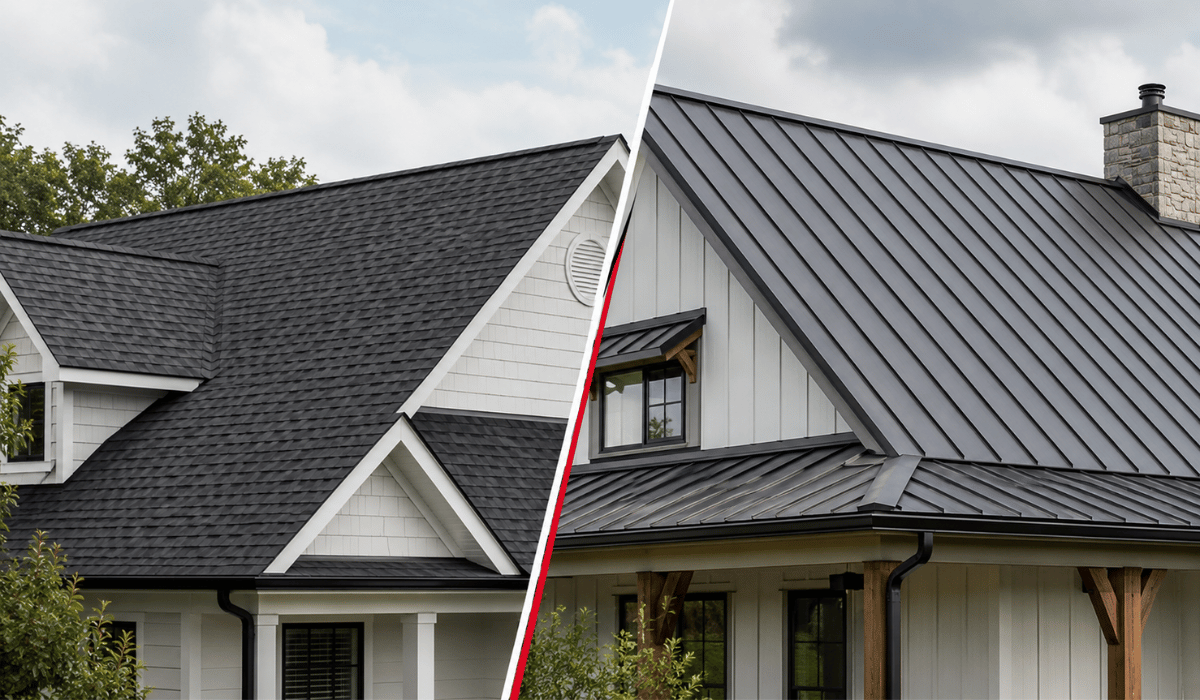
Shingles usually offer a lower initial cost and many familiar colors and profiles. Metal roofing generally requires a larger investment but may offer a longer service life.
| Consideration | Asphalt shingles | Metal roofing |
| Initial cost | Usually lower | Usually higher |
| Appearance | Numerous colors and profiles | Panels and specialty styles |
| Service life | Varies by product and conditions | Generally longer potential |
| Repairs | Localized replacement may be easier | Specialized work may be required |
| Storm performance | Depends on rating and fastening | Depends on material and attachment system |
| Buyer priority | Affordability and familiar style | Longevity and long-term ownership |
Consider your budget, architectural style, maintenance expectations, and planned ownership period. Request comparable proposals that identify the complete scope of each system.
Why Is Proper Shingle Installation Important?
Proper shingle installation helps the entire roofing system direct rainwater away from the home.
Shingles must be positioned in overlapping rows so water can move toward the eaves and gutters without entering gaps between roofing components.
Installation quality also affects how well shingles perform during strong winds and changing weather conditions.
Incorrect nail placement, uneven alignment, inadequate flashing, or poorly sealed edges can allow shingles to lift, crack, or shift.
These problems may expose the underlayment and roof decking to moisture.
Professional installation is important because it can help:
- Reduce the risk of roof leaks
- Protect the roof decking from moisture damage
- Improve resistance to wind-related shingle movement
- Support proper drainage into the gutter system
- Maintain a consistent and attractive roof appearance
- Prevent premature wear caused by installation errors
- Preserve eligibility for applicable product warranties
A complete installation should address more than the shingles themselves.
The contractor must also evaluate the decking, underlayment, flashing, drip edge, ventilation, starter course, and ridge caps.
When these components are installed correctly, they work together to protect the roof and support its long-term performance.
What Happens During Shingle Roof Installation?
A new roof installation in Atlanta begins with an inspection and written proposal. Professional roofers measure the roof, evaluate flashing and ventilation, and discuss materials.
Before tear-off, the crew should protect accessible landscaping, siding, windows, and outdoor belongings.
Removing the old roof may reveal hidden decking deterioration, so ask how repairs will be documented and priced.
After repairs, installers add the underlayment, drip edge, flashing, starter shingles, field shingles, ventilation, and ridge caps.
Correct alignment and fastening are important around transitions and wind-exposed areas.
The project should conclude with debris removal, a magnetic nail sweep, and a final inspection.
Homeowners should receive product and warranty documents. Many residential installations take a few days, but roof size, weather, complexity, and repairs can affect the schedule.
What Kind of Nails Are Used for Roof Shingles?
Asphalt shingles are typically secured with corrosion-resistant galvanized steel roofing nails.
Ring shank nails may provide additional holding strength. Nail length depends on shingle and decking thickness and must meet applicable requirements.
Roofing nails should be:
- Positioned within the designated nailing area
- Driven straight into the roof deck
- Installed flush with the shingle surface
- Long enough to penetrate the decking correctly
- Used in the quantity required for the product and local conditions
Overdriven nails can damage shingles, while underdriven or misplaced nails may interfere with sealing. Installers should follow the specified fastening pattern.
Is Shingle Roofing Right for Your Atlanta Home?
Shingle roofing can suit homeowners seeking an accessible price point, broad color selection, and multiple styles.
The right choice depends on the roof’s condition, weather exposure, budget, ventilation, and expected ownership period.
Eagle Watch Roofing can inspect your property, explain suitable shingle options, and prepare a detailed estimate for your Atlanta-area roof.
A property-specific evaluation is more useful than a general online price.
Before installing an asphalt shingle roof, homeowners should compare shingle types, expected performance, cost, appearance, and the condition of the existing roofing system.
Frequently Asked Questions
How long does a shingle roof last in Georgia?
The lifespan of an asphalt shingle roof depends on the shingle product, installation quality, attic ventilation, maintenance, drainage, and storm exposure.
A manufacturer’s warranty term should not be interpreted as a guaranteed roof lifespan.
Are architectural shingles worth the additional cost?
Architectural shingles offer greater visual dimension and may provide more performance options than basic three-tab products. Their value depends on the specific product, installed cost, warranty, and the homeowner’s priorities.
Can new shingles be installed over old shingles?
An overlay may be possible in limited circumstances, but removing the existing roof allows the contractor to inspect the decking. Roof condition, existing layers, building requirements, and product instructions should guide the decision.
Does a lifetime warranty cover every roofing problem?
No, limited lifetime warranties contain conditions, exclusions, and changing coverage periods. Basic coverage may focus on manufacturing defects, while workmanship protection may require separate or enhanced coverage.
How should I prepare for roof installation day?
Move vehicles and outdoor belongings away from the work zone, remove fragile items from walls and shelves, unlock required gates, and keep children and pets away from the property’s perimeter.