


Roof Repair Materials Newnan Homeowners Can Trust
Roof repair in Newnan, GA should begin with identifying the source of the damage rather than choosing a repair material based only on visible signs.
Missing shingles, damaged flashing, metal roof issues, or moisture beneath the roof covering may each require a different solution.
The right repair material depends on the existing roofing system, the extent of the damage, and manufacturer requirements. A professional inspection helps determine the appropriate repair approach.
Why Repair Materials Must Fit the Problem
A roof is made up of several components, including the roof covering, flashing, underlayment, and deck, each serving a specific purpose.
Repair materials should match the damaged component rather than simply cover the visible issue.
For example, replacing a shingle will not fix a leak caused by damaged flashing or deteriorated underlayment. A proper inspection helps identify the source of the problem and ensures the repair remains compatible with the existing roofing system.
Roof Repair Material Comparison
| Material | Common repair situations | What must be checked |
| Asphalt shingles | Missing, cracked, lifted, or storm-damaged shingles | Product compatibility, fastening, surrounding wear, underlayment, and deck condition |
| Metal roofing | Damaged panels, loose fasteners, open seams, or failed roof details | Panel type, fasteners, movement, coatings, seams, and sealant compatibility |
| Flashing | Leaks around chimneys, vents, skylights, walls, valleys, and roof transitions | Corrosion, physical damage, placement, surrounding materials, and water path |
| Roofing sealants | Approved joints, seams, small cracks, and specific flashing details | Substrate, product instructions, surface preparation, weather, and intended use |
| Underlayment | Areas where moisture has passed beneath the roof covering or roofing materials have been removed | Deck condition, moisture, overlap, product compatibility, and installation requirements |
No single material is suitable for every repair. The contractor should first identify whether the problem is in the surface covering, a transition, a seam, or a layer beneath the roof.
Asphalt Shingles for Localized Damage
Asphalt shingle repair may be appropriate when a limited number of shingles are missing, cracked, lifted, or damaged by wind or impact.
The replacement shingles should be compatible with the existing roof and installed according to the applicable fastening and sealing instructions.
The surrounding shingles should also be checked because the visible damage may extend beyond one piece.
Storms can cause granule loss, loosen shingles, and damage other parts of the roofing system.
The roof deck should also be properly built, structurally sound, and capable of holding roofing fasteners securely.
These conditions help determine whether the repair can remain limited to the surface or whether deeper roofing components also need attention.
A contractor should examine the exposed area for damaged underlayment, loose fasteners, moisture, or weak decking before installing the replacement material.
Shingle repair may not be practical when wear is widespread or when the surrounding materials are too deteriorated to support a dependable localized repair.
Metal Roofs Need a Different Repair Method
Metal roofing should not be repaired using the same approach as an asphalt shingle roof.
A metal roof problem may involve a punctured panel, loose or damaged fasteners, an open seam, deteriorated sealant, flashing, or movement around a roof penetration.
The correct repair depends on the type of metal roof and how its panels are joined.
Metal roofing repairs require careful attention to panel handling, fasteners, sealants, accessories, and final inspection because installation details can vary between roofing systems.
The repair material should be compatible with the specific metal panel, coating, seam, and application to support proper adhesion and performance.
A repair material must be compatible with the panel, coating, joint, and existing sealant.
Applying a general-purpose product without checking compatibility may interfere with adhesion or fail to accommodate the roof detail.
The contractor should determine whether the problem can be corrected at one seam or fastener or whether a larger panel section needs attention.
Flashing Repairs at Roof Openings
Flashing is used where the roof meets chimneys, walls, skylights, vents, valleys, and other transitions.
These areas require more than surface roofing material because they must direct water around joints and openings.
Flashing helps protect roof penetrations and intersecting roof sections by directing water away from joints, openings, and vertical surfaces.
It is commonly used around chimneys, vents, skylights, walls, and valleys, where improper installation can increase the risk of leaks
Flashing should be inspected for corrosion, bending, separation, cracks, incorrect placement, and physical damage.
Existing metal flashing should not automatically be reused. It should be in good condition and free from significant wear, rust, tears, or damage caused during the removal process.
When flashing has failed, adding sealant over the visible gap may not provide the same result as repairing or replacing the complete flashing detail.
When Roofing Sealants Are Appropriate
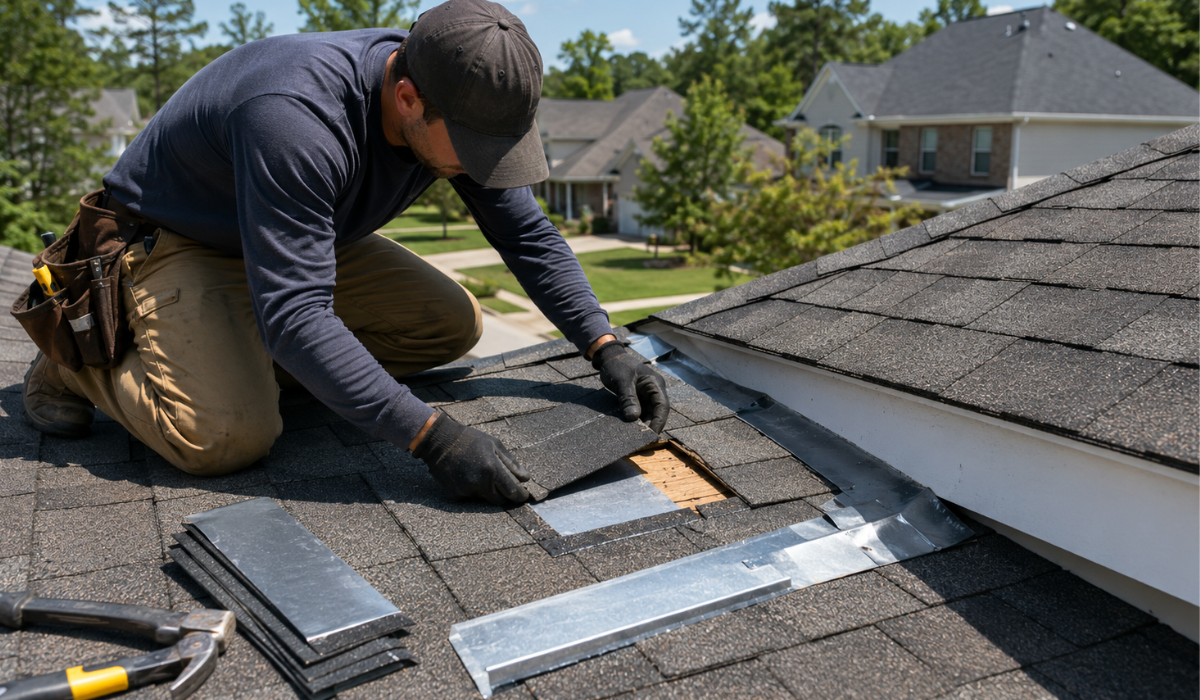
Roofing sealants can be useful for specific joints, seams, cracks, penetrations, and flashing repairs when the product is approved for the roofing material.
However, roofing sealant is a product category rather than one universal repair solution.
Silicone, polyurethane, rubberized asphalt, and other formulations may have different substrate, temperature, moisture, curing, and application requirements.
Different roofing sealants are designed for specific materials and repair conditions.
A product that works with asphalt shingles may not be suitable for metal roofing or single-ply membranes such as TPO, PVC, or EPDM.
The contractor should identify the roofing material before selecting a sealant and prepare the surface according to the product instructions.
Sealant may support a properly designed repair, but it should not be used to cover rotted decking, failed flashing, loose panels, or another underlying problem.
Underlayment and Decking Problems
Underlayment is installed between the roof deck and the exterior roofing material to provide an additional layer of protection if water gets beneath the roof covering.
During a repair, hidden issues such as torn underlayment, moisture damage, or soft decking may be discovered.
If the roof deck is damaged, it should be repaired before new roofing materials are installed to ensure a stable foundation.
The contractor should explain whether the repair is limited to the surface or requires work on the underlying layers.
How Local Conditions Affect Repair Timing
North and central Georgia’s warm, humid climate and frequent rainfall can affect when roof repairs are performed and how materials are installed.
However, the existing roof type and the damaged component remain the primary factors in material selection.
Before starting repairs, contractors should consider weather conditions, product requirements, and the roof’s overall condition to ensure a durable and compatible repair.
Matching the Existing Roof System
Repair materials should be compatible with the existing roof covering, fastening method, slope, and surrounding components.
Matching involves more than appearance, it also includes the material type, dimensions, profile, and installation requirements.
The contractor should evaluate whether the surrounding roofing remains in good condition before making repairs.
If the original product is no longer available, the available replacement options should be explained before work begins.
Repairing Storm-Related Damage
Storm damage can affect multiple roofing components, including shingles, flashing, gutters, and the roof deck, even when the damage is not immediately visible.
After severe weather, a professional inspection can determine whether a localized repair or a broader replacement is needed.
Repair materials should be selected based on the damaged components, and permanent repairs should address the underlying cause rather than just the visible signs.
When Repair May Not Be Enough
Localized roof repair may be suitable when the damage is limited and the surrounding roofing system remains in good condition.
However, if damage is widespread, leaks keep returning, or the roof deck has deteriorated, a replacement evaluation may be necessary.
A professional inspection helps determine the most appropriate solution and explains whether repair or replacement is the better long-term option.
Finding Local Roof Repair Help
Homeowners seeking roof repair in Newnan should choose a contractor who identifies the source of the damage, explains the recommended repair, and provides a detailed estimate.
The contractor should follow manufacturer guidelines and clearly outline the repair scope so homeowners can make informed decisions based on the roof’s condition rather than price alone.
Discuss Your Roof Repair With Eagle Watch Roofing
A roof repair should correct the damaged part of the roofing system rather than simply cover the visible symptom.
Eagle Watch Roofing evaluates roof damage for homeowners in Newnan, GA and explains whether the problem involves asphalt shingles, metal roofing components, flashing, sealants, underlayment, or decking.
Our team thoroughly inspects your roofing system, identifies the source of the damage, and recommends the most appropriate repair based on your roof’s condition.
We explain the repair process, materials involved, and any additional issues discovered during the inspection so you can make an informed decision.
Schedule an inspection today to discuss the best repair solution for your roof.
FAQs
What is the best material for roof repair?
There is no single material that is best for every repair. The right option depends on the existing roof system and the component that is damaged. Shingles, flashing, sealants, metal panels, and underlayment each address different roofing problems.
Should repair shingles match the existing roof?
Replacement shingles should be compatible with the existing product, dimensions, fastening pattern, and roof layout. Appearance may also matter, but physical compatibility is more important. A contractor should confirm that the replacement can be installed correctly beside the existing shingles.
Can roofing sealant stop a leak?
Sealant can be appropriate for certain joints, cracks, seams, and flashing details when it is approved for the roofing material. It is not suitable for every roof or every leak. Failed flashing, damaged panels, wet decking, and other underlying problems may require a more complete repair.
When should roof flashing be replaced?
Flashing may need replacement when it is corroded, torn, bent, separated, incorrectly installed, or damaged during previous roofing work. Its expected service life should also be considered. A contractor should inspect the full flashing detail before deciding whether it can be reused.
What does underlayment do during a repair?
Underlayment provides an additional layer beneath the exterior roof covering. If shingles or panels are removed, the contractor may find that the underlayment is torn, wet, or deteriorated. The affected section should be evaluated before the surface material is restored.