


What the Best Roofing Installer in Newnan Says About Fasteners
When searching for the best roofing installer in Newnan, property owners should understand why roofing fasteners deserve careful attention.
A roofing fastener is a mechanical component, such as a nail, screw, bolt, rivet, clip, or anchor, used to attach roofing materials to the roof deck or structural framework.
During roof installation, fasteners secure shingles, metal panels, flashing, membranes, and other components in their correct positions.
A roofing installer carefully considers the fastener type, length, coating, spacing, and placement because these details affect how securely the roof remains attached.
Incorrect fasteners or poor installation may lead to loose materials, corrosion, water entry, or reduced wind resistance. Proper fastener selection supports the roof’s stability, durability, and long-term performance.
This guide answers common questions property owners may ask a roofing installer about fasteners, including their types, materials, placement, installation, and role in roof performance.
Types of Roofing Fasteners Used in Residential and Commercial Roofing
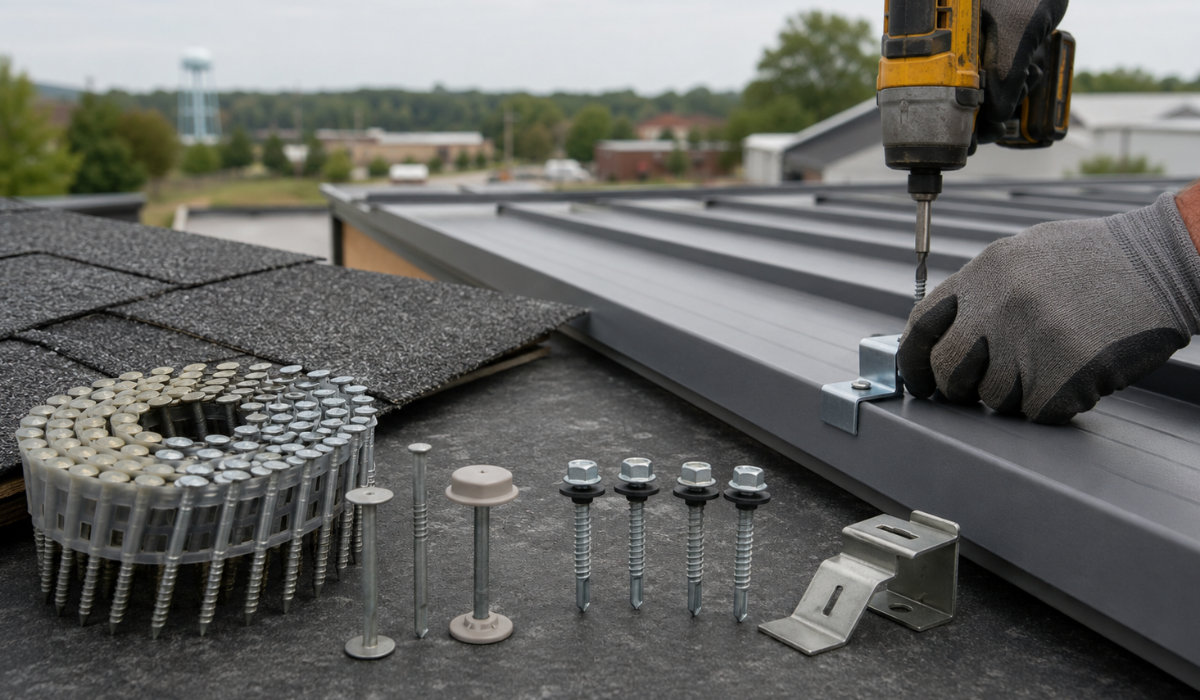
Roofing fasteners are designed to match specific roofing materials, installation methods, and structural requirements.
The right fastener helps distribute loads, keeps roofing components aligned, and supports the roof under changing weather conditions.
Because no single fastener works for every roofing system, professional installers choose products based on the roof’s design, deck material, and performance requirements.
Roofing Nails
Roofing nails remain the standard fastening solution for asphalt shingle roofs because they provide dependable holding power while allowing shingles to perform as intended.
They feature a broad head that spreads pressure across the shingle surface, reducing the risk of tearing during installation or under wind stress.
Common roofing nail types include:
Smooth shank nails: Designed for standard residential roofing projects with normal wind exposure.
Ring shank nails: Feature circular ridges that increase withdrawal resistance, making them suitable for high-wind installations.
Screw shank nails: Twist into the roof deck during installation to improve grip in wood substrates. Roofing contractors also consider nail diameter, head size, and corrosion-resistant coatings to ensure compatibility with the roofing system.
Roofing Screws
Roofing screws are primarily used for metal roofing systems because they create a stronger mechanical connection than traditional nails.
Most roofing screws include a bonded sealing washer that compresses against the panel surface, helping reduce the chance of water entering around the fastener.
Different screw designs serve different purposes:
- Self-drilling screws for steel framing.
- Self-tapping screws for wood roof decks.
- Stitch screws for joining overlapping metal panels.
- Long structural screws for thicker insulated roof assemblies.
Proper torque during installation is critical. Over-tightening can damage the washer, while under-tightening may leave gaps that affect weather protection.
Bolts and Structural Anchors
Bolts and anchors are used where roofing components must support significant weight or resist structural movement.
Rather than securing shingles or roof panels, these fasteners connect framing members and permanently mounted rooftop equipment.
Typical applications include:
- Steel roof framing
- Timber structural connections
- Solar panel support systems
- HVAC equipment mounting
- Safety railing and fall-protection anchors
Because these fasteners carry structural loads, installers select them according to engineering specifications and local building codes.
Rivets
Rivets create permanent connections between thin metal components without relying on threaded fasteners.
Once installed, they resist vibration well, making them valuable for metal roofing accessories exposed to repeated expansion, contraction, and wind movement.
Roofing installers commonly use rivets for:
- Flashing joints
- Metal coping
- Fascia trim
- Gutter systems
- Decorative metal details
Many aluminum and stainless-steel roofing systems rely on rivets because they produce a clean appearance while maintaining a durable connection.
Clips and Concealed Fasteners
Standing seam metal roofing systems often use concealed clips instead of exposed screws.
The clips attach the roof panel beneath the raised seam, allowing the roofing surface to remain free from visible fastener heads.
This fastening method offers several performance advantages:
- Reduces exposed penetration points.
- Allows metal panels to expand and contract naturally.
- Improves resistance to wind uplift.
- Creates a streamlined architectural appearance.
- Minimizes long-term maintenance associated with exposed fasteners.
Because the clips remain protected beneath the panels, they are less susceptible to weather-related wear than exposed fastening systems.
Insulation Fasteners and Plates
Low-slope commercial roofing systems frequently use insulation fasteners with pressure-distribution plates to secure insulation boards before installing the waterproof membrane.
The plates spread fastening pressure across a larger surface area, reducing the risk of compressing or damaging the insulation.
These fastening systems are commonly found beneath:
- TPO membranes
- PVC roofing
- EPDM rubber roofing
- Polyisocyanurate insulation boards
- Mechanically attached commercial roofing systems
The fastening pattern varies depending on the building’s wind zone, roof height, and membrane manufacturer requirements.
Specialty Roofing Fasteners
Some roofing materials require specialized fasteners that are engineered for unique performance conditions.
Selecting compatible fasteners helps prevent corrosion, chemical reactions, and premature material failure.
Examples include:
- Copper nails for slate and copper roofing installations.
- Stainless steel fasteners for coastal or humid environments.
- Aluminum fasteners for lightweight aluminum roofing panels.
- Concrete anchors for attaching roofing components to masonry roof decks.
Matching the fastener material to the roofing material helps maximize service life and maintain manufacturer warranty requirements.
Where Should Roofing Fasteners Be Placed?
Proper fastener placement is essential for a durable, weather-resistant roof. Incorrect positioning can reduce wind resistance, allow water intrusion, and compromise the roofing system.
Professional roofing installers follow manufacturer guidelines and local building codes to determine the correct fastening locations.
Fastener Placement for Asphalt Shingles
Roofing nails should be installed within the designated nail zone on each shingle. Correct placement improves wind resistance and helps maintain the manufacturer’s warranty.
Metal Roof Panel Fastener Locations
Metal roof fasteners are installed based on the panel design. Exposed-fastener systems use screws, while standing seam roofs rely on concealed clips that allow for thermal expansion.
Fastening Flashing Components
Flashing around chimneys, valleys, skylights, and walls requires carefully positioned fasteners to minimize water entry and maintain a watertight seal.
Ridge Caps and Hip Areas
Because ridge caps and hips face stronger wind exposure, installers follow approved fastening patterns to improve stability and long-term performance.
Starter Strip Installation
Starter strips are securely fastened along the roof edge to support the first row of shingles and help protect against wind-driven rain. Where Should Roofing Fasteners Be Placed?
How Many Roofing Fasteners Does a Roof Need?
The number of fasteners required depends on the roofing material, roof size, slope, and local weather conditions.
Asphalt shingle roofs often require four to six nails per shingle, while high-wind areas may require additional fasteners.
Metal roofing systems follow different fastening schedules based on panel design and engineering specifications.
More fasteners do not always improve roof performance. Excessive fastening can damage roofing materials, create unnecessary penetrations, and reduce the roof’s ability to accommodate natural expansion and contraction.
Experienced roofing installers follow manufacturer-recommended fastening patterns and Newnan building code requirements to achieve the best balance between strength and durability.
How Do Roofing Fasteners Affect Roof Lifespan?
Although roofing fasteners are small components, they have a significant impact on the overall lifespan of the roof.
Properly installed fasteners keep roofing materials securely attached during storms, reduce the risk of water intrusion, and maintain structural stability over many years.
Quality fasteners also accommodate normal thermal movement, helping metal roofing systems expand and contract without causing damage.
Corrosion-resistant materials further extend service life by preventing rust and deterioration.
When roofing fasteners are selected and installed correctly, homeowners often experience fewer repairs, lower maintenance costs, and better long-term roof performance.
Why Hiring the Best Roofing Installer in Newnan Matters
Fasteners may seem like small components, but they directly influence the strength, weather resistance, and longevity of an entire roofing system.
Hiring the best roofing installer in Newnan ensures every fastener is selected according to the roofing material, local climate, and manufacturer specifications.
Experienced professionals understand Newnan’s weather conditions, follow Georgia building codes, and install roofing systems using approved fastening methods.
They also ensure proper spacing, placement, and material compatibility to maximize roof performance.
Professional installation not only protects your investment but also helps preserve manufacturer warranties and reduce future repair costs.
Conclusion
Roofing fasteners are one of the most important yet often overlooked parts of any roofing system.
Whether installing asphalt shingles, metal roofing, flashing, or underlayment, the correct fastener type, material, length, and placement all contribute to a roof’s structural integrity and long-term performance.
Improper fastening can lead to loose materials, water intrusion, corrosion, and costly repairs.
By understanding the role of roofing fasteners and working with the best roofing installer in Newnan, homeowners can ensure their roof is installed according to manufacturer recommendations and local building codes.
Investing in quality fasteners and professional workmanship today helps protect your home, improve weather resistance, and extend the lifespan of your roofing system for years to come.
FAQs
Can roofing nails rust?
Yes, standard steel nails may rust if they lack protective coatings. Galvanized or stainless steel fasteners provide better corrosion resistance and are commonly recommended for roofing applications.
Are screws better than nails?
Neither is universally better. Roofing nails are commonly used for asphalt shingles because they provide excellent holding power and flexibility. Screws are often preferred for metal roofing systems due to their strong grip and sealing washers.
Can old fasteners be reused?
In most cases, no. Reusing old fasteners may reduce holding strength and increase the risk of corrosion or installation failure. New fasteners are generally recommended during roof replacement.
How long do roofing fasteners last?
High-quality galvanized or stainless steel fasteners can last for decades when properly installed and matched with compatible roofing materials.
What happens if the wrong fasteners are used?
Incorrect fasteners may loosen, corrode, leak, or fail prematurely. They can also void manufacturer warranties and reduce the roof’s ability to withstand severe weather.