


What Is a Roof Drip Edge and Why Does It Matter in Newnan?
Understanding the purpose of a roof drip edge in Newnan can help homeowners recognize why small roofing components matter just as much as the visible shingles.
A drip edge is a metal flashing component installed around designated outer edges of a roof.
It helps direct runoff away from the edge of the roof and reduces the chance of water reaching vulnerable areas beneath the roofing materials.
Although it may be difficult to see from the ground, the drip edge works with the shingles, underlayment, flashing, and gutter system.
When it is missing, loose, bent, or incorrectly positioned, the roof may not manage water as intended.
Homeowners do not need to understand every installation detail. However, knowing what a drip edge does can help them ask better questions during a roof inspection, repair, or replacement project.
What Is a Roof Drip Edge?
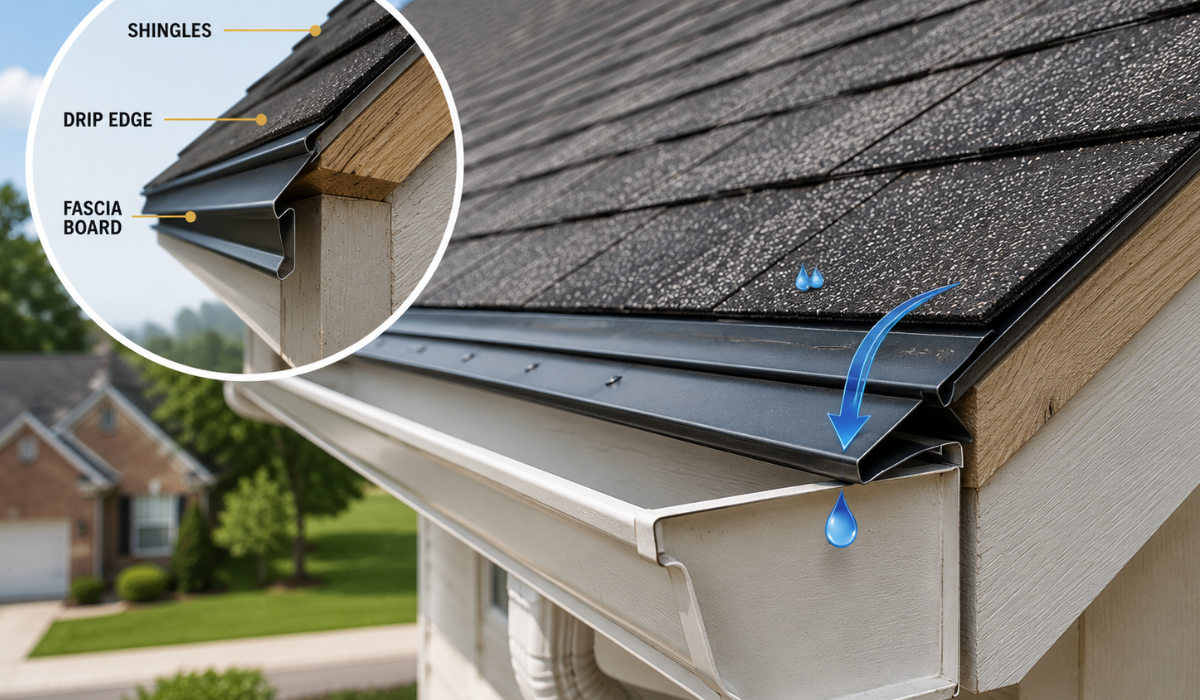
A roof drip edge is a noncorroding metal flashing installed along specific roof edges.
Its shape creates a defined point where water can leave the roof instead of following the underside of the shingles toward the building.
Drip edges are commonly made from aluminum, galvanized steel, or another material approved for the roofing system.
The correct material and design depend on the roof covering, manufacturer instructions, and applicable construction requirements. GAF, for example, recommends noncorroding metal drip edges at the eaves and rakes of its shingle roofs.
The component may be small, but it must be integrated correctly with the surrounding roofing layers. It should not be treated as a decorative strip added after the rest of the roof is complete.
Where Is Drip Edge Installed?
On a typical sloped shingle roof, a drip edge is installed at the eaves and rake edges.
The eaves are the lower horizontal edges where runoff moves toward the gutters. The rakes are the sloped edges along the sides of a gable roof.
These areas form the outer boundaries of the roofing system. They are also transition points where shingles, underlayment, roof decking, gutters, and exterior trim may meet.
Current International Residential Code language requires drip edges at the eaves and rake edges of shingle roofs.
Georgia adopted the 2024 International Residential Code with Georgia amendments as a mandatory state code effective January 1, 2026. Local requirements and project details should still be confirmed before installation begins.
How Does a Drip Edge Work?
Water does not always fall directly from the end of a shingle into a gutter. It can cling to roofing surfaces and travel toward the underside of the roof edge.
A properly positioned drip edge creates separation between the runoff and the underlying construction.
This helps water fall clear of the roof edge or enter the gutter instead of moving toward areas that are not designed for repeated moisture exposure.
The drip edge does not replace shingles, underlayment, flashing, or gutters.
Each component has a different purpose. The drip edge supports the system at the point where runoff leaves the roof.
Why Does Drip Edge Matter?
The outer edge of a roof includes several materials and transitions.
If runoff repeatedly reaches the wrong area, moisture may affect wood components, exterior finishes, or the connection between the roof and gutter system.
A drip edge helps reduce this risk by creating a controlled path away from the underlying construction.
It also provides a finished transition between the roofing material and the edge of the roof.
Its effectiveness depends on more than simply being present. The metal must be suitable for the roofing system, positioned correctly, securely fastened, and integrated with the other layers.
A damaged or poorly installed drip edge may provide limited protection even when it appears to be in place.
What Happens When Drip Edge Is Missing?
A missing drip edge does not always cause an immediate or obvious problem.
Moisture-related damage may develop gradually and remain hidden until the affected area begins to show visible deterioration.
Possible warning signs include water moving behind the gutter, peeling paint near the roofline, stained exterior trim, loose edge flashing, or softened wood.
These symptoms can also have other causes, so they should not be treated as proof that the drip edge is responsible.
A gutter may be clogged, misaligned, damaged, or installed too far from the roof edge. Shingle overhang, flashing, roof slope, and previous installation work may also influence how water moves.
A professional inspection can identify the source instead of assuming that every roof-edge issue requires the same repair.
How Drip Edge Relates to Gutters
Drip edges and gutters perform separate but connected functions.
The drip edge helps runoff leave the roofing material cleanly. The gutter receives that runoff and carries it toward the downspouts.
Problems can occur when the gap between these components allows water to pass behind the gutter.
However, installing or replacing drip edges may not correct the issue if the gutter itself is loose, incorrectly positioned, or unable to drain properly.
A contractor should examine how the roof edge and gutter work together rather than evaluating either component in isolation.dr
Why Drip Edge Matters During Roof Replacement
Roof replacement provides an opportunity to inspect areas that may be difficult to evaluate while the old roofing system is still in place.
Once the existing shingles are removed, the contractor can review the condition of the roof decking, underlayment areas, edge flashing, and nearby wood components.
Damaged materials can then be addressed before the new roof covers them.
Existing drip edges should not automatically be reused. Its condition, dimensions, placement, compatibility, and connection with the new roofing system should be evaluated.
Replacing shingles without correcting a damaged roof edge may leave a weakness beneath an otherwise new roofing system.
Can Drip Edge Be Added During a Repair?
In some situations, a localized repair may include correcting loose, bent, or damaged edge flashing. In others, the surrounding shingles, underlayment, gutter placement, or decking condition may make the work more involved.
Adding a drip edge to an existing roof is not always as simple as sliding metal beneath the shingles.
Roofing components are layered in a specific order, and changing one part may affect the materials around it.
A contractor should first determine why the existing roof edge is not working properly. This helps prevent a surface-level repair from hiding a more significant concern.
Signs the Roof Edge Needs Inspection
Homeowners may not be able to see the drip edge clearly from the ground, but certain conditions may justify a closer evaluation.
Water appearing behind the gutters, visible gaps below the shingles, loose metal, damaged trim, and staining near the roofline may indicate a problem.
Gutters pulling away from the house can also be a warning sign, although this may result from failed fasteners, excess debris, poor drainage, or damaged fascia rather than the drip edge alone.
After strong winds or roofing work, homeowners may also notice that edge materials appear bent or displaced.
Because these conditions can have multiple causes, the safest approach is to request an inspection rather than climbing onto the roof or attempting to adjust the metal.
Drip Edge Installation Requirements Can Vary
Drip edge installation should follow the requirements that apply to the specific roofing project.
The International Residential Code includes guidance for drip edges on shingle roofs, including its location, overlap, extension, and fastening.
Local amendments, roof design, roofing material, and manufacturer instructions may affect how the component should be installed.
Product requirements may also vary based on metal type, fastener placement, shingle overhang, and the relationship between the drip edge and underlayment.
Homeowners should therefore avoid relying on one universal installation rule found online.
A professional roofing contractor should review the applicable requirements and manufacturer instructions for the specific roof.
Why Professional Inspection Is Important
Roof-edge work takes place near one of the most dangerous parts of the home. Wet materials, steep slopes, loose components, and limited footing can create a serious fall risk.
Attempting to bend, pull, nail, or reposition the drip edge may also damage nearby shingles or change how water moves through the roofing system.
A professional roofer can inspect the edge from the correct position and review related components at the same time. This makes it easier to determine whether the concern involves the drip edge, gutter, fascia, decking, shingles, or another transition.
The inspection should lead to a clear explanation of the problem and the appropriate next step rather than an automatic recommendation for extensive roofing work.
Have Your Roof Edge Checked in Newnan
Drip edge is only one part of the roofing system, but problems at the edge of the roof should not be ignored.
Eagle Watch Roofing helps homeowners in Newnan evaluate roof-edge concerns during roof inspections, repairs, and replacement planning.
The team can review the visible flashing, nearby roofing materials, gutters, and supporting components to determine where attention may be needed.
Contact our team if you notice water behind the gutters, damaged edge metal, deteriorated trim, or another concern near the roofline.
A professional evaluation can help identify the source and explain the available repair options.
FAQs
What is the main purpose of a roof drip edge?
A roof drip edge helps direct runoff away from the underlying construction at the outer edge of the roof. It creates a defined point where water can leave the roofing material. It also supports the transition between the shingles and the gutter or exterior roof edge.
Where is the drip edge installed?
Drip edge is commonly installed at the eaves and rake edges of a shingle roof. Eaves are the lower horizontal edges, while rakes are the sloped sides of a gable roof. The exact installation must follow the applicable code and product instructions.
Is drip edge required in Georgia?
Georgia currently uses the 2024 International Residential Code with Georgia amendments. The IRC requires drip edges at the eaves and rake edges of shingle roofs. Contractors should still verify current local requirements and manufacturer instructions for each project.
Can a missing drip edge cause a roof leak?
Missing or damaged drip edges can contribute to moisture problems near the roof edge, but it is not the only possible cause. Gutters, flashing, shingles, and decking may also be involved. An inspection is needed to identify where the water is entering or traveling.
How can I tell whether the drip edge is damaged?
Possible signs include loose or bent metal, visible gaps, water behind the gutter, peeling paint, or damaged trim near the roofline. These conditions may have several causes. A roofer should inspect the full area before recommending a repair.
Should the drip edge be replaced with a new roof?
The existing drip edge should be evaluated during roof replacement. It may need replacement if it is damaged, incompatible, incorrectly positioned, or unable to meet the requirements of the new roofing system. It should not automatically be reused without inspection.
Can homeowners repair drip edges themselves?
Roof-edge work involves fall risks and can affect surrounding shingles, underlayment, and gutters. Improper adjustments may create a new path for water. A professional roofing contractor should inspect and repair the area safely.