
Roof Insurance Claims Glossary for Homeowners Planning a New Roof Installation
Roof insurance claims can feel confusing for homeowners, especially after storm damage, hail, wind, or unexpected roof leaks.
During the claims process, homeowners often hear roofing and insurance terms that may not be familiar.
Understanding common roof insurance claim terminology can help homeowners feel more confident when speaking with roofing contractors, insurance adjusters, and their insurance company.
It can also make it easier to understand repair estimates, claim documents, and recommendations for a new roof installation.
Why Roof Insurance Claim Terms Matter
Many roof insurance claims involve inspections, repair estimates, adjuster reports, and replacement recommendations.
If homeowners do not understand the terms being used, it can be difficult to know what is covered, what damage exists, and what work may be needed.
Learning these terms can help homeowners:
- Understand roof damage reports
- Compare contractor estimates
- Follow the insurance claim process
- Communicate with adjusters more effectively
- Better understand new roof installation recommendations
- Make informed decisions about repairs or replacement
Common Roof Insurance Claim Terms Homeowners Should Know
Actual Cash Value (ACV)
Actual cash value refers to the current value of the roof after depreciation is applied.
Insurance companies may use ACV to determine how much they will pay for an older roof that has experienced damage.
Replacement Cost Value (RCV)
Replacement cost value refers to the amount needed to replace the damaged roof with similar materials at current market prices.
Policies that include RCV may provide greater coverage than policies based only on ACV.
Deductible
A deductible is the amount the homeowner must pay before insurance coverage begins.
Deductibles can vary based on the policy and may be different for hail, wind, or hurricane damage.
Insurance Adjuster
An insurance adjuster is the person who inspects the roof damage on behalf of the insurance company.
The adjuster evaluates the condition of the roof, identifies covered damage, and helps determine whether repairs or replacement may be approved.
Roof Inspection
A roof inspection is a detailed review of the roof performed by a roofing contractor or insurance adjuster.
Inspections may include shingles, flashing, gutters, roof decking, attic moisture, and signs of leaks.
Storm Damage
Storm damage refers to roof problems caused by severe weather events such as hail, wind, heavy rain, fallen tree limbs, or flying debris.
Hail Damage
Hail damage may include dents, cracks, bruising, granule loss, punctures, or broken shingles.
Hail can also damage gutters, vents, flashing, skylights, and siding.
Wind Damage
Wind damage often includes lifted shingles, missing shingles, damaged flashing, loose roof components, and debris impact.
Roof Leak
A roof leak happens when water enters the home through damaged roofing materials, flashing, vents, or roof penetrations.
Roof leaks may cause water stains, mold growth, damaged insulation, and ceiling damage.
Roof Replacement
Roof replacement involves removing the old roofing materials and installing a new roof system.
Insurance companies may approve roof replacement if the damage is widespread or cannot be repaired effectively.
Roof Repair
Roof repair involves fixing damaged areas of the roof without replacing the entire system.
Repairs may include replacing shingles, sealing flashing, fixing leaks, or repairing gutters.
Depreciation
Depreciation is the reduction in value based on the age and condition of the roof.
Older roofs may have more depreciation, which can affect the amount paid by the insurance company.
Claim Denial
A claim denial happens when the insurance company decides not to approve coverage for the roof damage.
Denials may occur if the damage is considered wear and tear, poor maintenance, or outside the policy terms.
Supplemental Claim
A supplemental claim may be filed if additional roof damage is found after the initial claim has been approved.
This can happen when contractors discover hidden damage during the roof repair or replacement process.
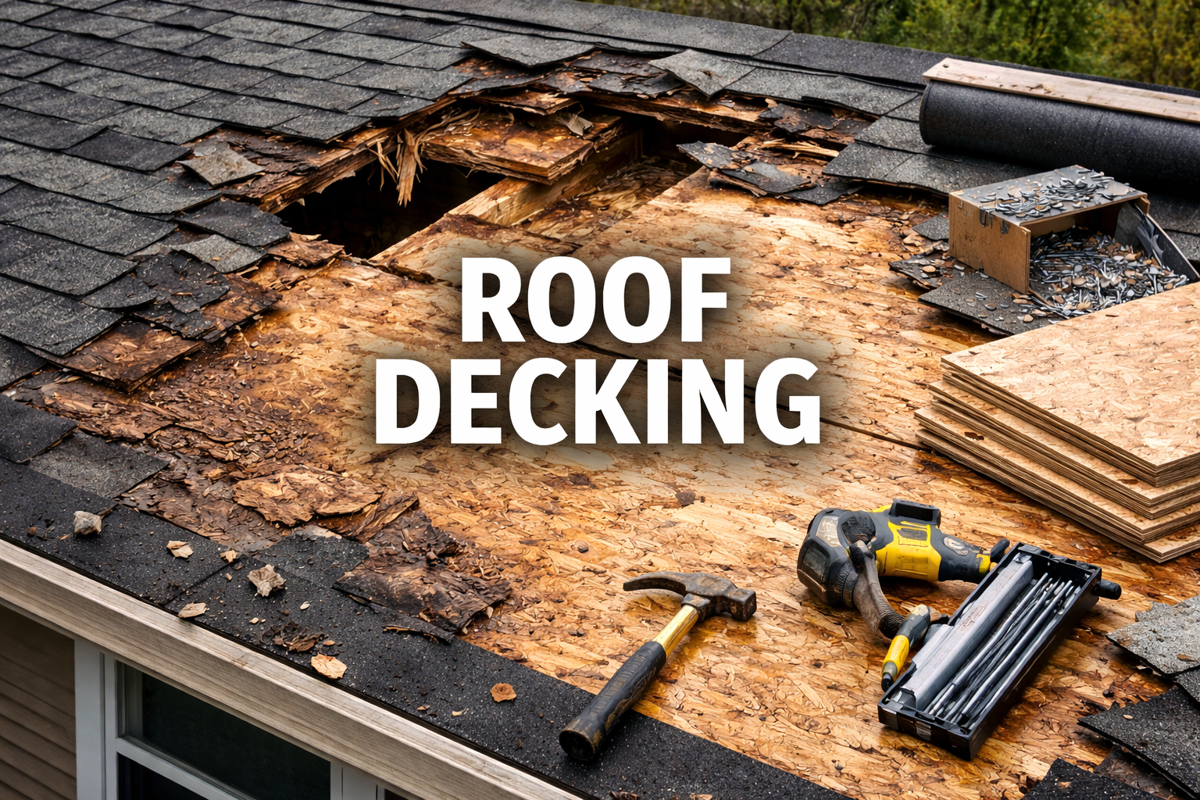
Roof Decking
Roof decking is the wooden surface underneath the roofing materials.
If the decking is soft, rotted, or damaged by moisture, it may need to be repaired or replaced during a new roof installation.
Flashing
Flashing is the metal material installed around chimneys, vents, skylights, and valleys to help prevent leaks. Damaged flashing can allow water to enter the roof system.
How These Terms Relate to a New Roof Installation
Homeowners planning a new roof installation after storm damage often hear many of these terms during the claims process.
Insurance companies, roofing contractors, and adjusters may use them when discussing roof condition, repair costs, and replacement options.
Understanding these terms can help homeowners better evaluate:
- Whether roof replacement is necessary
- How insurance coverage may apply
- What damage has been identified
- What costs may be involved
- What materials may be installed during the new roof project
Learn More About Roof Insurance Claims and New Roof Installation
Understanding roof insurance claim terms can help homeowners feel more prepared during inspections, claim discussions, and new roof installation projects.
Knowing the difference between repair, replacement, depreciation, and coverage options can make the process easier to follow.
Eagle Watch Roofing helps homeowners understand roof damage, navigate insurance claim terminology, and determine when roof repair or new roof installation may be needed.
A professional roof inspection can help identify damage and provide clear next steps for moving forward.
Frequently Asked Questions
What is the difference between ACV and RCV?
Actual cash value is based on the current value of the roof after depreciation. Replacement cost value is based on the amount needed to replace the roof with similar materials at current prices. Policies that use ACV may result in lower payouts because the roof’s age and condition are factored into the claim amount. RCV coverage may provide more financial protection because it is designed to cover the full cost of replacement.
Why would an insurance company deny a roof claim?
Insurance companies may deny claims if the damage is caused by normal wear and tear, poor maintenance, old age, or issues not covered by the policy. Claims may also be denied if the damage existed before the policy started or if the homeowner waited too long to report the issue. A professional roof inspection can help provide documentation that supports the claim process.
Can hidden roof damage be added to a claim later?
Yes, additional damage found after the initial inspection may be included through a supplemental claim. This often happens when contractors discover damaged decking, flashing, or moisture problems during roof replacement. Hidden issues are not always visible from the outside, especially after storms or leaks. Supplemental claims can help homeowners recover additional costs if more repairs are needed than originally expected.
What does depreciation mean in a roof insurance claim?
Depreciation refers to the reduced value of the roof due to age and condition. Older roofs may have lower claim values because the insurance company subtracts depreciation from the payout. For example, a roof that is 15 years old may not receive the same claim amount as a newer roof with similar damage. Understanding depreciation can help homeowners better estimate out-of-pocket costs during the claims process.
Why is roof decking important during a new roof installation?
Roof decking supports the roofing materials above it. If the decking is damaged by moisture, leaks, or rot, it may need to be replaced before new roofing materials can be installed. Weak or damaged decking can reduce the stability and lifespan of the new roof. Inspecting the decking during roof replacement helps ensure the new roof is installed on a solid foundation.